

Explore New Dimensions of Sound with Doppler Effect
Last Edited: Nov 29, 2023
The Doppler effect (or the Doppler shift) is the change in frequency or wavelength of a wave about the observer moving relative to the wave source. The result was named after the Austrian physicist Christian Doppler, who described the phenomenon in 1842. A typical example of a Doppler shift is the change of pitch you hear when a vehicle sounding a horn approaches and recedes from you. Compared to the emitted frequency, the received frequency is higher during the approach. It is identical when passing by and lower during the recession.
Exploring Sound With the Doppler Effect
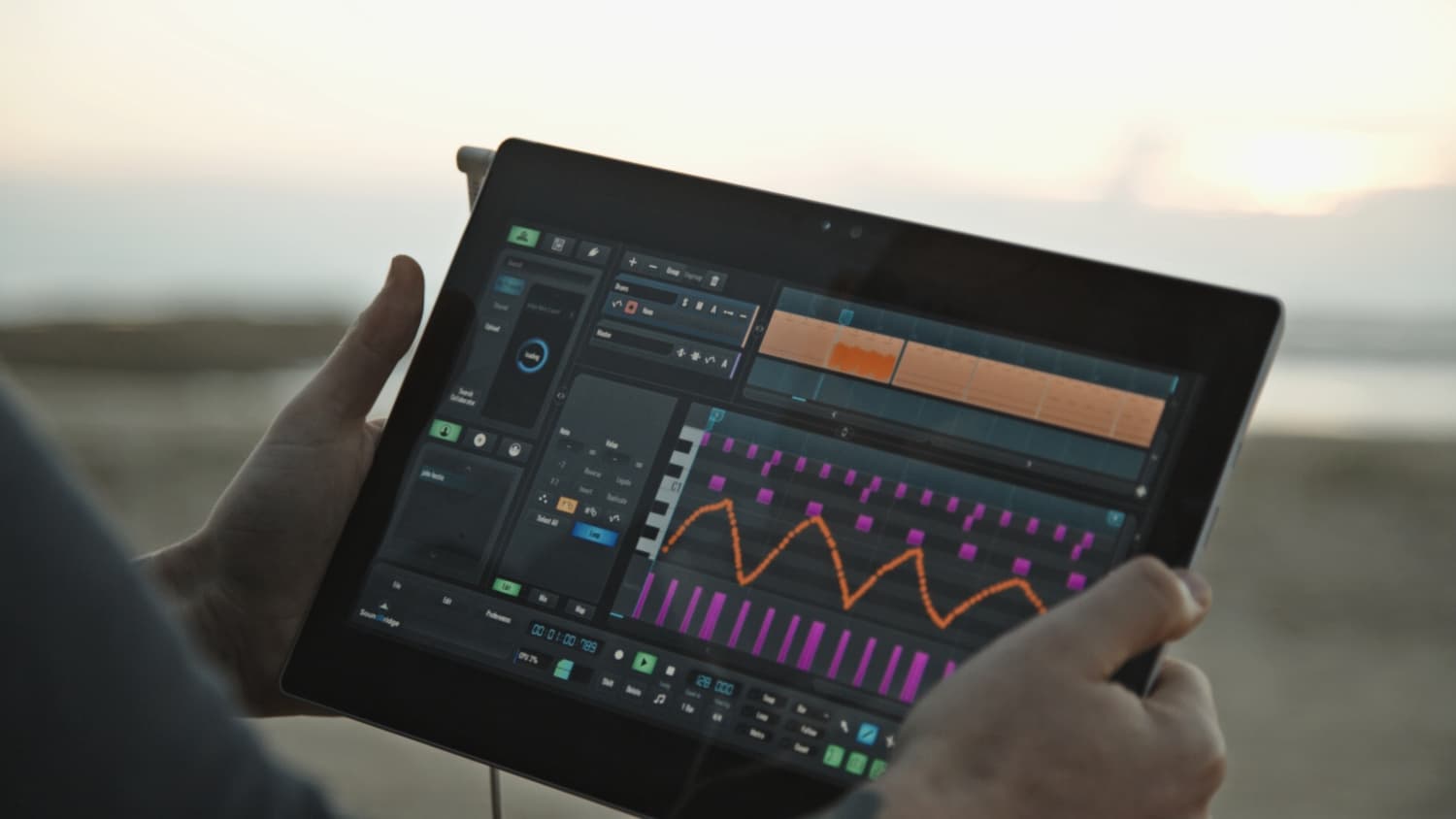
With the Doppler effect, you can explore new dimensions of sound and movement. It is possible to create the illusion of traveling through space or the rush of a passing train. Furthermore, with Doppler, you control the frequency change, speed, and distance from your sonic source with pinpoint accuracy. One of the relatively old software plugin units, but simultaneously easy to use, is Doppler by Waves Audio. In the following tutorial, I will try to introduce the plugin and show you some practical examples. As usual, we will start by adding a new instance of the Doppler on a newly created audio channel within the Soundbridge: DAW, which contains a simple drum loop.


Interface
Space display is taking the central part of the Doppler interface. This window shows a "field" in front of the listener. He is always at the 0,0 point (indicated by the red dot). A sound moving from the Start to the Endpoint will be shown in this space display, along with the start/ end points. Additionally, the Moving Cursor will travel on the Track. Direction is shown in the upper left of the Space Display—the two arrows that control the direction of Travel on the Track.
Elapsed time in the upper right of the Space Display is the elapsed time counter,r, which resets at the beginning of each Doppler cycle.
The Track is presented as the orange line, as seen in the Space Display, which shows the path of the sound source as if it were moving. The Track has a Start and end point and a center handle.
Mode choose either continuous cycling or one-shot behavioral modes. Continuous will repeat the Track Time and Doppler process repeatedly; one-shot mode will start when the process is triggered, either by Energy (triggered by the threshold) or manually.
Trigger choose either Energy or Manual modes. The Energy trigger starts the Track cycle when it detects audio. The Manual trigger starts the Doppler effect cycle each time you click it, even if the Track cycle has not yet been completed.
Additional Parameters
In the right part of the interface, listed vertically, there are additional parameters,s which are controlling gain, panning, pitch, and reverb. Also, for the reverb, the connected parameters are air dump, reverb time,e, and brightness. Moreover, each control has an associated Bypass button for easy comparison or elimination of that effect. After the initial introduction, let's hear this awesome plugin in action!
~Drum Loop - Unprocessed
~Drum Loop -Processed with Doppler 1
~Drum Loop -Processed with Doppler 2
MASTER MUSIC PRODUCTION
Expert-led courses designed to take you from fundamentals to finished tracks.
HOUSEFrom bouncy bass and solid kicks, this course teaches you the most modern House music production techniques needed to succeed and stand out.
TRAPQuit sounding like generic Trap and produce something World with hints of the Far East. Create ethnic soundscapes to put your Trap ahead of the curve.
AMBIENTProduce relaxing, sophisticated psy-influenced ambient. Psychedelic and relaxing to listen to, create meditative soundscapes to put your listeners in Zen.