

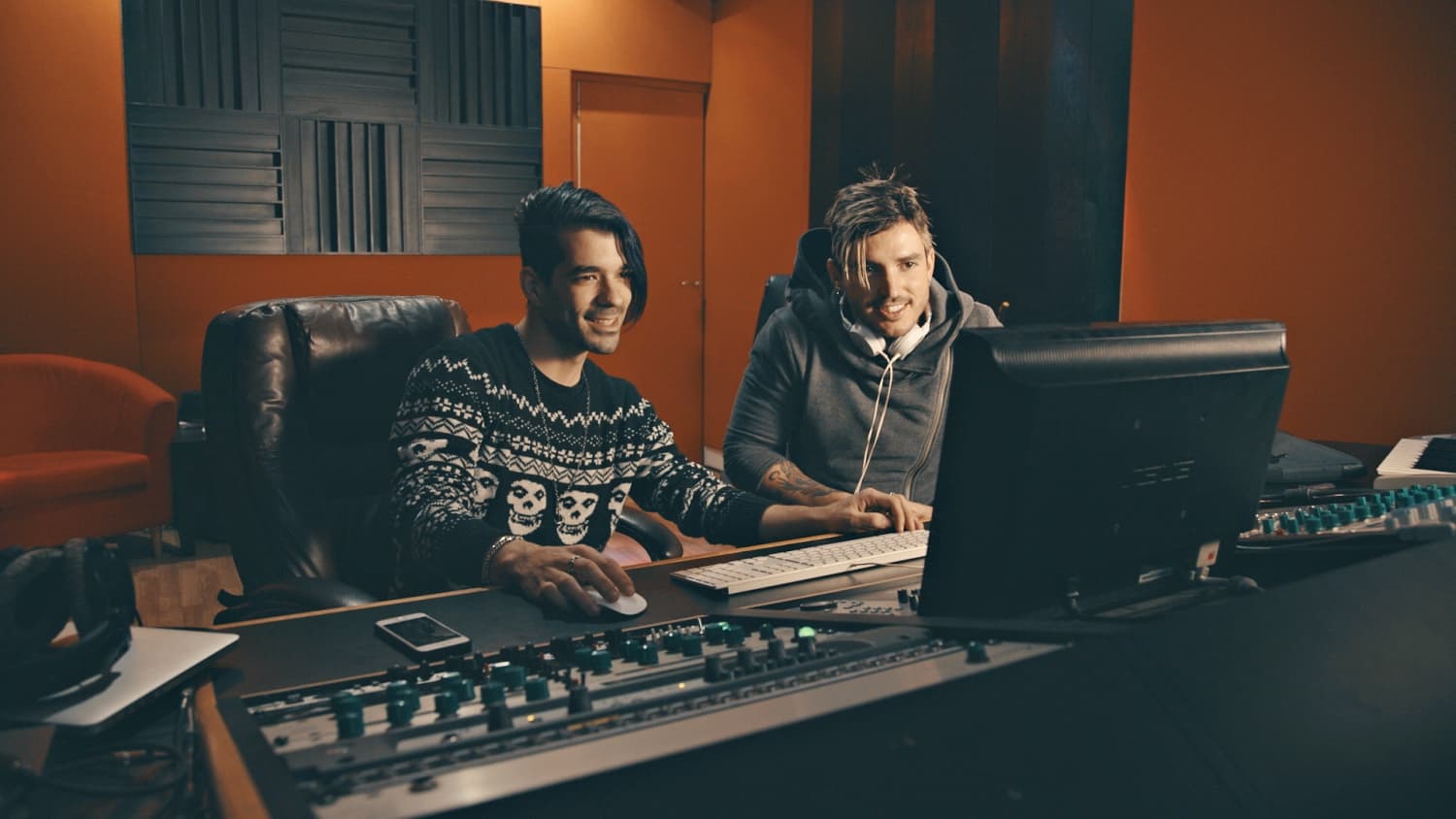
10 Essential Tips For Setting Up Your Home Studio
Last Edited: Nov 16, 2023
A common misconception among today's musicians is that good recordings can only be made in big studios. The truth is that over the past three decades, the music industry has changed a lot. Recordings, which needed expensive consoles and microphones, can now be quickly done with 500$ equipment or less. People realize the potential of home recording equipment but still do not get the optimum results. This article will help you turn your studio into a professional one without being too heavy on the pocket. Here are the most important things you need to know to set up your studio:
1. Getting Rid of Standing Waves
Depending upon the room's dimension, specific low frequencies build up due to standing waves. This frequency build-up enhances your listening to the song with a particular frequency, thus hindering the mixing process. In order to get rid of standing waves, one can play sine waves at different frequencies and pick out the build-up frequency. Then putting bass traps and diffusers at the right place can stop such build-ups. Also, software like Room EQWizardd and SpectraFoo can make your life easier by analyzing the frequency build-up for the whole room.
2. Diffuse the First Reflections
If the first reflections are not taken care of, then it is tough to mix. The song might sound good in your studio, but you will see anomalies you would not notice otherwise anywhere else. One can put a mirror in different places on the wall to eliminate these. Wherever you can see the speaker's tweeter in the mirror, just put a diffuser. This will solve the problem and make your life easier.
3. Boundary Effect
If the monitors are placed too close to the wall, it can cause destructive interference (lack of low end) or Constructive Interference (more low end). None of the above is useful because we aim for a flat response. Corners and windows are often evil because of the same reason. So, the placement of the monitors should be such that there is the least amount of cut or boost. One can measure the cut or gain and then equalize the monitors accordingly to get a flat response.
4. Monitor placement
The following points should be kept in mind while placing the monitors:
- The tweeter should be at ear height. It can go up to + or -15 degrees up/down.
- The two monitors and your head should form an equilateral triangle. The two ends of the triangle should meet about 18" behind your head.
- The front face of the monitors should be angled towards you.
5. Room Shape
The more uneven and oddly shaped room, the better it is. Symmetrical rooms, like Cube, rectangle, etc., are the worst for recording or mixing. The key is to avoid parallel surfaces. Standing waves are most likely to build up with parallel walls, which can make the space sound bad.
6. Check the Phase of Cables
The polarity of the cables used for recording makes a huge difference. The phase of the wires can result in bad-sounding recordings even if you use the world's best microphones. Make sure that all the cables are in the same phase.
7. Always Confirm Left and Right
Check that the right the output from the interface goes to the right speaker and vice versa. A simple mistake like this can cause serious panning issues in your mixes.
8. Listening Position
The listening position should never be in the middle of the studio. Thirds is probably a good option. The aim is to avoid any form of symmetry.
9. Dialing up the sub
The subwoofer is used to extend the lower range of frequencies. It should never pump up the low end to provide a colored sound. So, dial your sub accordingly.
10. Acoustic Treatment
Regarding acoustic treatment, I would advise not to run for the most expensive treatment. There are many instrumental DIY techniques. A lot of times these are better than buying the most expensive treatment for your studio.
MASTER MUSIC PRODUCTION
Expert-led courses designed to take you from fundamentals to finished tracks.

HOUSEFrom bouncy bass and solid kicks, this course teaches you the most modern House music production techniques needed to succeed and stand out.

TRAPQuit sounding like generic Trap and produce something World with hints of the Far East. Create ethnic soundscapes to put your Trap ahead of the curve.

AMBIENTProduce relaxing, sophisticated psy-influenced ambient. Psychedelic and relaxing to listen to, create meditative soundscapes to put your listeners in Zen.