

Best Audio Collaboration Tools for Bands in 2026
Last Edited: Jul 28, 2026
What Are the Top Platforms for Remote Band Audio Collaboration?
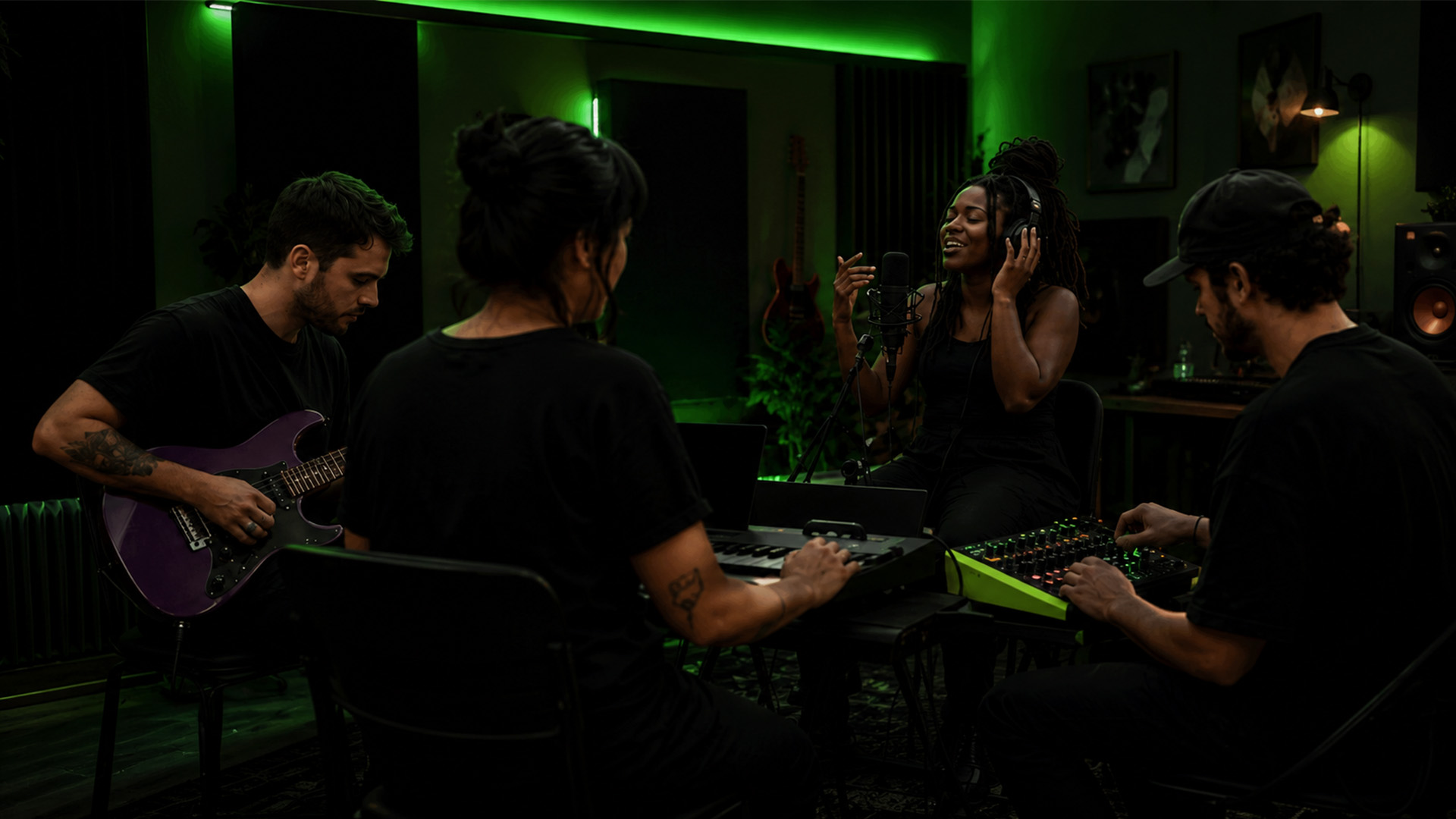
The best platform for audio collaboration for bands depends on one thing: how your band actually works. If you need real-time jamming, JamKazam wins. If you want a full cloud DAW with social discovery, BandLab is hard to beat for free. For workflows requiring studio-grade fidelity and zero-latency remote tracking, some platforms offer advanced features suited for serious production.
| Platform | Best For | Key Features | Audio Quality | Real-Time Collaboration | Pricing | Ease of Use |
|---|---|---|---|---|---|---|
| JamKazam | Live real-time jamming | Low-latency audio/video chat | High | Yes | Free/paid tiers | Moderate |
| SoundStorming | Spontaneous idea exchange | Real-time creation, social sharing | Good | Yes | Free/paid tiers | Easy |
| Pibox Music | Feedback and revision rounds | Timestamped waveform comments, chat | High | Async | — | Easy |
| Soundtrap | Beginners and educators | Browser DAW, built-in collaboration | Good | Yes | — | Very easy |
| Avid Cloud Collaboration | Pro Tools professionals | Version-controlled Pro Tools sessions | Studio | Async/sync | Subscription | Moderate |
| Ableton Link | Live tempo sync | Real-time tempo/phase sync across devices | High | Yes | Free | Easy |
| Amuse Pro | Indie distribution plus collab | Collaboration with release tools | Good | Async | Paid tiers | Easy |
| SoundBridge | High-fidelity remote sessions | Zero-latency tracking, 192kHz, video/talkback | Studio (192kHz) | Yes | Free/paid tiers | Moderate |
| BandLab | Community and bedroom producers | Free cloud DAW, unlimited storage, social | Good | Yes | Free | Very easy |
| Kompoz | Global crowdsourced projects | Built-in royalty splits, async contributor tools | Good | Async | Free/paid | Moderate |
| Trackd | Mobile-first collaboration | Easy mobile recording and sharing | Good | Async | Free/paid | Very easy |
| Flat | Score-based composition | Real-time sheet music editing and playback | Notation | Yes | Free/paid tiers | Easy |
| Vampr | Musician networking and discovery | Social networking plus project collab | Good | Async | Free/paid | Easy |
| CoCreatea | Broad social plus collaboration | 29 music roles, networking, free collab tools | Good | Async | Free | Easy |
These platforms cover the full spectrum of remote music collaboration, from casual bedroom sessions to professional studio-grade production. The right pick comes down to your band’s workflow, technical needs, and budget.
How Do These Tools Compare on Features That Actually Matter?
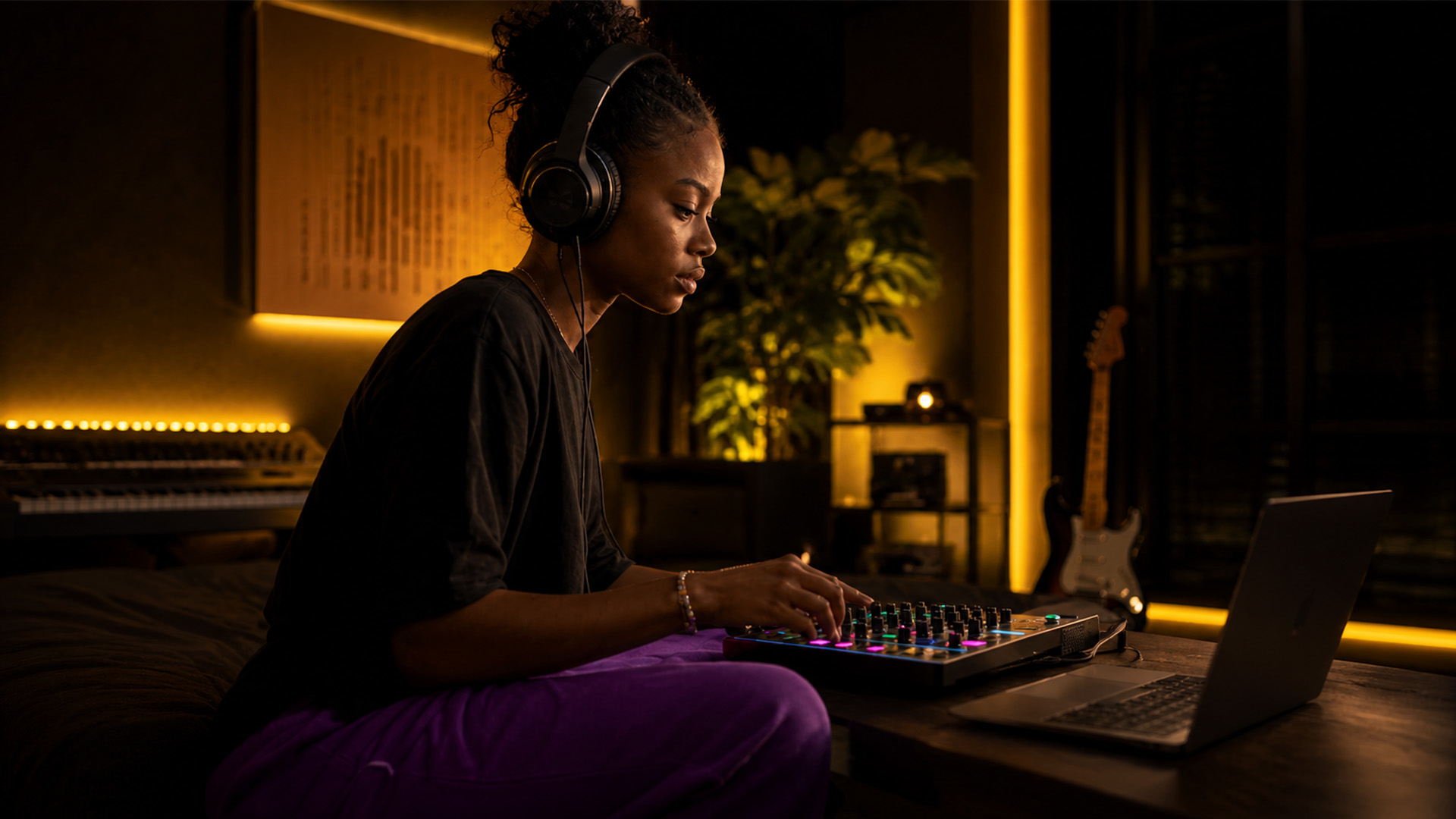
Not every platform is built for the same kind of work. Understanding where each one excels saves you from a frustrating mismatch between your workflow and your tools.
Real-Time vs. Asynchronous is the first split to understand. JamKazam is purpose-built for playing together live, with JamKazam’s low-latency audio/video chat making it the go-to for virtual rehearsals. Ableton Link sits in its own category, handling tempo and phase synchronization across devices rather than audio transfer, making it indispensable for live electronic sets.
For async production work, Pibox Music stands out with timestamped comments placed directly on waveforms. That single feature eliminates the “around the second chorus” vagueness that derails most feedback rounds. Kompoz goes further for international projects, building royalty splits and publishing handling directly into the platform so you never need to draft paperwork separately.
DAW Integration separates the professional tier from the rest. Avid Cloud Collaboration is tightly woven into Pro Tools, offering version-controlled session sharing that keeps every revision accessible. SoundBridge takes a different approach: zero-latency remote tracking with bi-directional plugin control means your bandmates can adjust effects in real time, not just swap files. Cloud-based music production has matured to the point where the gap between a remote session and a physical one is mostly organizational, not technical.
BandLab and Soundtrap both run in a browser, which lowers the barrier to entry significantly. BandLab is genuinely free with unlimited storage and a built-in social network for finding collaborators. Soundtrap leans into education and Spotify integration, making it the natural pick for school bands or beginners. Neither replaces a desktop DAW for serious mixing, but both excel at sketching ideas and keeping everyone on the same project file.
Flat occupies a niche most lists overlook: real-time collaborative sheet music editing. For bands with arrangers or composers working on scores, it fills a gap that audio-only platforms cannot. Vampr and CoCreatea shift the focus to discovery, with CoCreatea supporting 29 distinct music roles and free cross-discipline collaboration tools, making it one of the broadest networking platforms available.
Amuse Pro bundles distribution with collaboration, which matters for independent bands who want to move from creation to release without switching platforms. Trackd keeps things mobile-first, prioritizing ease of recording and sharing over deep production features. SoundStorming targets the spontaneous end of the creative process, where capturing a raw idea quickly matters more than polished production.
Pro Tip: Before committing to any platform, run a single test session with your whole band. Latency, interface friction, and file compatibility issues surface immediately in a live test, and they are far harder to diagnose from a feature list alone.
How Do You Collaborate Effectively on Remote Audio Projects?
The leading cause of failed collabs is not a technical problem. Disappearing collaborators and undefined roles derail more projects than DAW incompatibility ever will. Get the human side right first, then sort the tools.
Here is a workflow that holds up across any platform:
- Agree on roles and splits before you create anything. A signed split sheet documenting each contributor’s ownership percentage is legally significant evidence if a dispute arises. Have everyone confirm terms before the first file is shared.
- Standardize your file format. The universal stem format for cross-DAW work is 24-bit WAV at 44.1kHz or 48kHz, exported from bar 1 beat 1. Every DAW on the planet imports this without conversion. Use 48kHz if there is any chance of sync licensing.
- Centralize everything in one project hub. Generic cloud drives like Dropbox work for file storage but lack music-specific features like timestamped feedback and version history. A dedicated platform keeps demos, revisions, and feedback in one place.
- Use timestamped feedback tools. Vague comments waste everyone’s time. Platforms like Pibox Music pin feedback to the exact waveform moment, cutting revision cycles dramatically.
- Set a realistic response timeline upfront. A one-week turnaround per exchange is a reasonable default for casual collabs. If your timeline shifts, send a quick update. Silence is the fastest way to kill a creative partnership.
- Protect your rights with a split sheet. Agree on publishing splits before release, not after the song becomes successful. Retroactive negotiations are far more contentious than the same conversation held early.
Reference tracks consistently reduce subjective misinterpretations more effectively than verbal feedback alone. Send a reference at the start of every new project phase.
Pro Tip: Pick one communication channel per project and stick to it. Over-communication compensates for the visual cues you lose in remote work, but scattered messages across email, Discord, and text create their own chaos. One channel, one thread.
What Makes SoundBridge Stand Out for Remote Band Sessions?
SoundBridge addresses the pain points that most collaboration platforms treat as acceptable limitations. Zero-latency remote tracking means your guitarist in Austin and your drummer in Chicago can record together without the timing drift that plagues standard video-call sessions. The bi-directional plugin control goes further: collaborators can adjust virtual instruments and effects in real time, not just listen to a static mix.
The high sample rate options available in some platforms enable greater audio fidelity, which matters when you are tracking acoustic instruments or planning a high-resolution release. Integrated video and talkback keep the session feeling like a real studio, with visual communication built into the workflow rather than bolted on via a separate Zoom call.
| SoundBridge Feature | Standard Collaboration Tool |
|---|---|
| Zero-latency remote tracking | Typical async file exchange |
| 192kHz sample rate support | Usually 44.1–48kHz cap |
| Bi-directional plugin control | Static mix sharing |
| Integrated video and talkback | Separate video call required |
| Studio-accurate sync | Drift-prone real-time streaming |
| Version control built in | Manual file naming |
| Mac and Windows native | Often browser-only |
Version control in SoundBridge solves what producers call “Final_Mix_v23_ACTUAL_FINAL.wav chaos.” Every iteration is logged automatically, and automated version control cuts revision time and confusion compared to traditional file exchange. The interface is designed to stay accessible for musicians at every level, not just engineers, so your vocalist can navigate the session without a tutorial.
For bands working on film scoring or sync licensing, native video support and high-quality time-stretching tools handle the 48kHz requirement and frame-accurate editing that post-production demands. You can read more about SoundBridge’s remote workflow to see how these features connect in practice.
SoundBridge Gives Your Band a Real Studio Workflow, Remotely
If the platforms above cover your basic needs, SoundBridge is the step up for bands who want the full studio experience without booking a room. Where browser DAWs ask you to compromise on audio quality and where async tools ask you to wait, SoundBridge delivers zero-latency remote recording with studio-accurate sync and 192kHz fidelity.
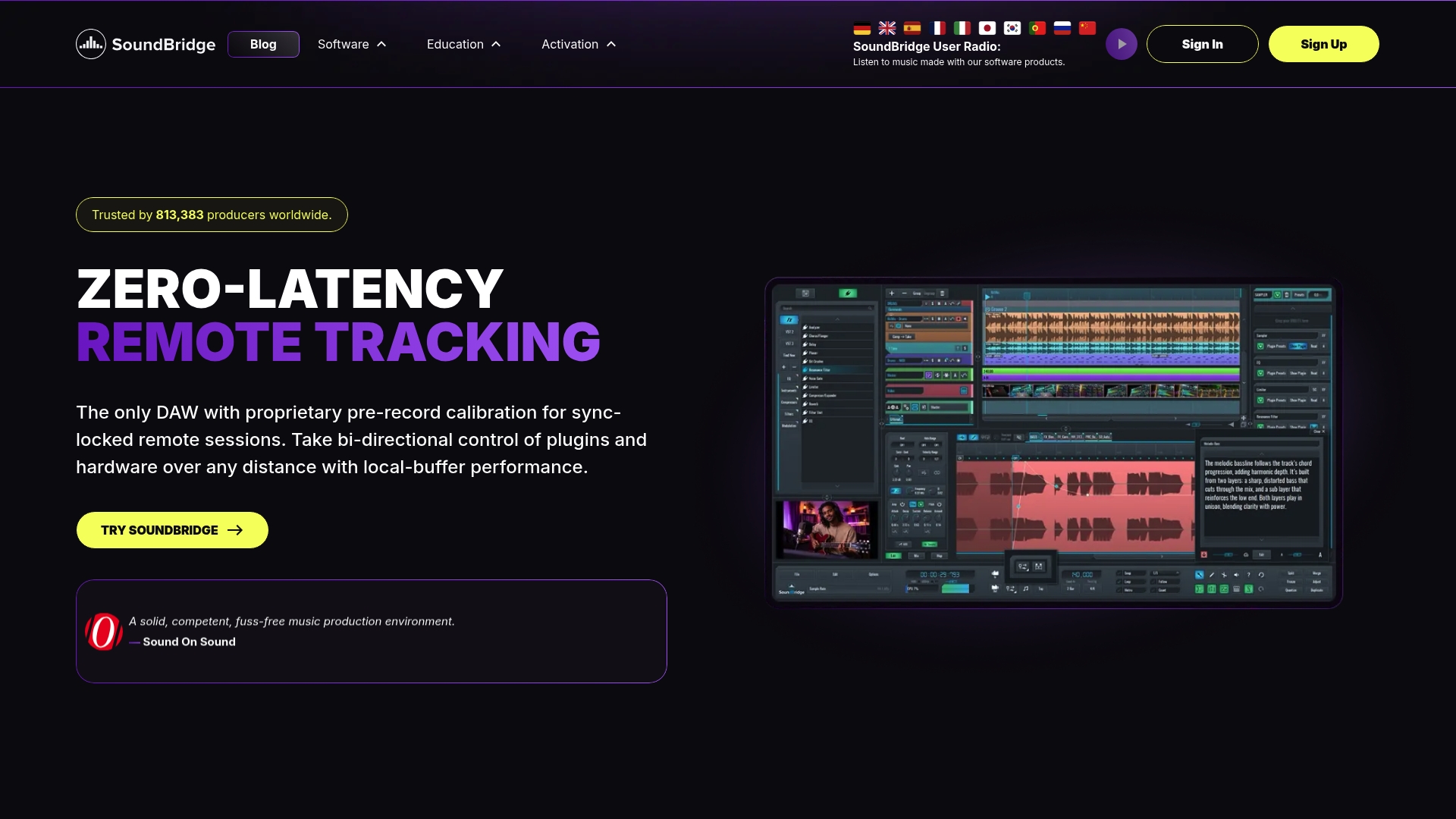
The free tier lets you start immediately, no credit card required, so your band can test the workflow before committing. The paid tier unlocks the full feature set: bi-directional plugin control, integrated video and talkback, advanced time-stretching, and the kind of version control that keeps every session organized from first idea to final mix. For bands serious about remote audio editing and production quality, SoundBridge is worth a serious look.
Key Takeaways
The best remote audio collaboration platform for your band is the one that matches your actual workflow, not the one with the longest feature list.
| Point | Details |
|---|---|
| Match platform to workflow | Real-time jammers need JamKazam; async producers need Pibox or Kompoz. |
| Standardize file formats | Export stems as 24-bit WAV at 44.1kHz or 48kHz from bar 1 beat 1 for cross-DAW compatibility. |
| Protect rights early | Sign a split sheet before release; retroactive splits cause far more conflict than early agreements. |
| Version control saves sessions. | Automated versioning eliminates file-naming chaos and preserves every revision for comparison. |
| SoundBridge for studio-grade remote work | Zero-latency tracking, 192kHz support, and bi-directional plugin control set it apart for serious band sessions. |
Recommended
MASTER MUSIC PRODUCTION
Expert-led courses designed to take you from fundamentals to finished tracks.
HOUSEFrom bouncy bass and solid kicks, this course teaches you the most modern House music production techniques needed to succeed and stand out.
TRAPQuit sounding like generic Trap and produce something World with hints of the Far East. Create ethnic soundscapes to put your Trap ahead of the curve.
AMBIENTProduce relaxing, sophisticated psy-influenced ambient. Psychedelic and relaxing to listen to, create meditative soundscapes to put your listeners in Zen.