

Audio Post Loudness Standards: Hit −1 dBTP and −23/−16 LUFS Targets
Last Edited: Oct 13, 2026
Measure loudness with the ITU‑R BS.1770 algorithm family, then apply the delivery spec your platform actually requires: ATSC A/85 for US broadcast, EBU R128 for European delivery, or AES TD1008 for streaming and on-demand. Expect targets in the −23 to −24 LUFS range for long-form broadcast, closer to −16 LUFS for many streaming and podcast platforms, and a true-peak ceiling around −1 dBTP at the codec input. Every deliverable should report integrated loudness, true peak, loudness range, and any required dialnorm metadata.
TL;DR:
- Use platform-specific loudness targets: approximately -24 LUFS for US broadcast, -23 LUFS for Europe, and -16 LUFS for streaming and podcasts, with a true peak ceiling near -1 dBTP.
- Ensure your metering is compliant and calibrated, using oversampling true-peak meters and recording meter settings to prevent measurement drift and encoding artifacts.
- Deliver precise metadata and report integrated loudness, true peak, loudness range, and dialnorm values to avoid rejection and playback inconsistencies.
- Apply headroom before encoding for wide dynamic range material and document any deviations from standard targets to support pre-approval and clear communication.
1. Standards Comparison Matrix and Short Gloss
Every loudness spec you will encounter in post-production traces back to the same measurement engine, but the targets and gating rules shift depending on who is receiving your file. Think of it like tuning to different rooms: the instrument stays the same, the acoustics change. Here is the quick reference you actually need pinned above your meter.
| Standard | Measurement method | Target integrated loudness | True peak limit | Typical tolerance | Applies to |
|---|---|---|---|---|---|
| ITU-R BS.1770 | K-weighted, gated algorithm (measurement engine, not a target) | Not applicable; defines the algorithm others use | Defines true-peak estimation method | Not applicable | All formats, underlies every other row |
| ATSC A/85 (2026 revision) | Dialog-gated, long-form | Around −24 LKFS anchor | Codec-input guidance included | Set by broadcaster, typically tight | US broadcast long-form television |
| EBU R128 | Integrated, gated | −23 LUFS | −1 dBTP | ±1 LU typical | European broadcast and delivery |
| AES TD1008 | Dialog-integrated or integrated | Platform dependent, commonly −16 LUFS target in practice | −1 dBTP at codec input | Platform dependent | Streaming, on-demand audio |
| ANSI/CTA-2075 | Integrated, distribution focused | Distribution guidance, platform dependent | Aligned with −1 dBTP practice | Distribution dependent | Consumer playback devices, distribution chain |
ITU‑R BS.1770-5 is not a delivery target at all. It is the algorithm that every other row in that table relies on to produce a number, covering K-weighting, gating behavior, and multichannel and object-based extensions for immersive formats. Once you understand that distinction, the rest of the landscape stops looking like a set of competing rulebooks and starts looking like a single measurement method viewed through different lenses.
ATSC A/85’s 2026 revision modernizes US broadcast practice around dialogue-gated measurement for long-form content, meaning the meter effectively ignores silence and low-level passages, focusing on speech-dominant material to estimate perceived loudness. This matters for anything with wide swings between dialogue and effects or music, since a straight integrated measurement without gating can be misleading for that kind of program. The revision also refreshes dialnorm metadata workflows and adds a quick reference for loudness and true peak, aimed at producers who need an answer without wading through the full document.
EBU R128 remains the backbone of European delivery, targeting −23 LUFS with a true peak ceiling of −1 dBTP, and it uses the same gated measurement logic as its American counterpart, just tuned to a different anchor point. If you deliver to both markets, the practical move is to build two loudness passes into your workflow rather than trying to average the two targets and satisfy neither.
AES TD1008 covers internet audio streaming and on-demand distribution and recommends dialog-integrated or fully integrated loudness methods depending on the content type, along with a maximum true peak of −1 dBTP at the codec input for lossy encoders. That codec-input detail is easy to miss and expensive to ignore: measure after encoding, and you might already have intersample clipping baked into the delivered file. ANSI/CTA-2075 rounds out the picture with distribution-focused guidance aimed at how loudness behaves once it reaches consumer playback devices, reinforcing the same −1 dBTP discipline further down the chain.
The row you apply depends entirely on content shape. Long-form broadcast programs with clear speech content call for dialog-gated measurement per A/85. Short-form streaming content, ads, and music-forward material often perform better under integrated measurement per TD1008, since there may not be enough continuous dialog to reliably gate against. Get this choice wrong, and your meter will report a number that technically follows the spec’s math but does not represent what the standard intended you to measure.

2. Key Measurement Concepts Every Mixer Should Master
LUFS and LKFS are the same unit under two names: Loudness Units Full Scale and Loudness K-weighted Full Scale, both produced by the BS.1770 measurement algorithm. Broadcast documents tend to use LKFS out of historical habit; streaming and music documents tend to use LUFS, and your meter will likely display one or let you toggle between them. There is no conversion math needed. Zero difference in value, just a naming convention split between two industries that grew up separately.
K-weighting is the filtering stage that makes the measurement track human perception instead of raw signal energy. It applies a shelf boost above roughly 2 kHz and a high-pass response at low frequencies, echoing how the ear actually weighs different parts of the spectrum. Without that filter, a bass-heavy mix and a vocal-forward mix with identical peak levels could sound wildly different in loudness to a listener while showing the same number on a flat RMS meter. K-weighting is what makes LUFS meaningful, rather than just another way to measure volts.
Gating solves a related problem: silence and quiet passages should not drag down your loudness average just because they are technically part of the file. BS.1770 measures loudness in 400 millisecond blocks, then applies both an absolute threshold (rejecting anything below roughly negative 70 LUFS) and a relative threshold (rejecting blocks more than 10 LU below the ungated average). What remains after both gates is your integrated loudness figure. Dialog-gated measurement takes this further by focusing specifically on speech-dominant sections, which is why A/85 leans on it for broadcast content where dialog carries the perceptual weight even when music and effects surround it.
True peak, expressed in dBTP, estimates the highest instantaneous level your signal will reach after digital-to-analog conversion or lossy encoding, including peaks that fall between your actual sample points. A standard peak meter only sees the samples you have, but reconstruction filters and codecs can produce overshoots that your meter never showed. That is why compliant true-peak meters oversample the signal, and why the standards documents recommend oversampling rates well above the source sample rate to catch those hidden peaks before they turn into clipping or codec artifacts on the listener’s end.
Loudness Range, or LRA, measures the statistical spread between quiet and loud sections within a program, giving you a single number for dynamic variation rather than the loudness level itself. A tight LRA suggests heavy compression or limiting throughout; a wide LRA suggests a program that breathes between soft and loud passages, common in film scores and classical recordings. LRA does not tell you whether a mix is good or bad, but it tells you whether your dynamics match the expectations of the platform you are delivering to, and it belongs in your delivery report right alongside integrated LUFS and true peak.
3. Platform and Deliverable Targets Across Broadcast, Streaming and Podcasts
Different destinations expect different numbers, and hitting the wrong target not only risks a rejected delivery; it can also mean your carefully mixed dynamics get flattened by an automatic normalizer on the other end. Broadcast, streaming, and podcast delivery each carry their own conventions worth memorizing rather than looking up every time.
US broadcast television under the 2026 revision of ATSC A/85 anchors around a dialog-gated target commonly cited near −24 LKFS, with dialnorm metadata carrying that value through the transmission chain so downstream decoders can normalize playback without your mix needing to be re-processed at the consumer end. The revision’s modernization announcement specifically calls out new streaming annexes and a consolidated quick reference, recognizing that broadcasters increasingly deliver the same content across traditional transmission and streaming simultaneously. Getting dialnorm wrong is one of the most common QC failures in broadcast delivery: the audio might measure correctly, but if the metadata tag does not match, downstream decoders normalize against the wrong number and the aired result drifts from what you mixed.
EBU R128 keeps European delivery anchored at −23 LUFS integrated with a −1 dBTP true peak ceiling, and the workflow difference from US practice is mostly cultural rather than technical: European broadcasters tend to enforce the target more uniformly across genres, while US practice historically allowed more variation by program type before A/85 tightened things up.
Streaming and on-demand audio are where things get platform-specific, and AES TD1008 is the reference document that ties it together. TD1008 recommends dialog-integrated or fully integrated measurement depending on the content, and it sets a practical maximum true peak of −1 dBTP at the codec input for lossy encoders, a detail included because encoding can introduce overshoots that a pre-encode meter will not catch. ANSI/CTA-2075 extends this thinking to the consumer-device end of the chain, reinforcing the same peak discipline so that loudness behavior remains consistent from your session to a listener’s phone speaker or soundbar.
Music streaming services generally normalize louder than broadcast, and album-level content raises its own question: normalize each track individually, or normalize the album as a unit so that the artistic loudness relationships between tracks are preserved during playback? Track-by-track normalization can undermine a deliberately quiet intro track or a loud climax, flattening the dynamic arc an artist intentionally built. Album normalization preserves those relationships but requires you to plan your mastering pass around the album’s overall integrated loudness rather than each track in isolation, which is worth flagging with your mastering engineer before final bounces.
Podcasts sit closer to the AES TD1008 streaming guidance than to music conventions, since spoken-word content responds well to dialog-gated or dialog-integrated measurement and tends to target loudness levels that keep speech intelligible without excessive compression. Across all of these, the −1 dBTP codec-input ceiling is the one number that appears almost everywhere, and it is worth treating as a hard rule, regardless of which loudness target you are chasing that day.

4. Metering, Monitoring and Calibration Best Practices
A loudness number is only as trustworthy as the meter that produced it and the room you listened in to sanity-check it. Both pieces matter, and skipping either one is how mixes pass the meter and still sound wrong on delivery.
Monitor level calibration comes first. Set your monitoring chain to a known SPL reference point and keep it consistent across sessions, so your ears calibrate to the same loudness a compliant meter would report. This matters because a mix that reads correctly on a meter but was monitored too loud or too quiet in the room often reveals problems on other systems: bass that felt right at high monitoring levels can feel thin at conversational volume, and vice versa. The meter tells you the number; your calibrated ears tell you whether the number sounds right, and you need both checks before calling a mix finished.
For the meter itself, use one that correctly implements the BS.1770 algorithm, including proper gating and true-peak oversampling. Document your settings as part of your session notes: gate mode (gated versus ungated, dialog-gated versus standard), integration time, and whether you measured pre or post any final limiter stage. These details matter when a delivery gets questioned later, since two engineers using different gate settings on the same file can report genuinely different integrated LUFS numbers, and you want a record showing your method was correct rather than guessing after the fact.
Most compliant meters offer several operating modes, and knowing when to use each saves confusion. Momentary loudness shows a very short window, useful for catching transient spikes while mixing. Short-term loudness uses a rolling few-second window, good for watching how a scene or verse trends in real time. Integrated loudness accumulates from a defined start point, typically the beginning of the program, and is the number you report on delivery. Sliding window modes are available on some meters for continuous monitoring of live or long-running content, where a fixed integration start point does not make sense. Use momentary and short-term during the mix to catch problems as they happen, and switch to integrated for the final verification pass once picture lock and mix are done.
Verification should not stop at blindly trusting the meter’s readout. Run known test files and tones at documented reference levels through your meter and full signal chain periodically to confirm nothing has shifted, whether due to a plugin update, a sample rate conversion, or a routing change you forgot about. Cross-check readings between two different compliant meters when a delivery is high-stakes, since agreement between independent implementations is the closest thing to proof that your number is real. Meter compliance testing procedures exist in the standards documents themselves precisely because meter behavior can drift or be implemented incorrectly, and a five-minute cross-check costs far less than a rejected delivery.
5. Deliverable Checklist and QC Workflow
Before any file leaves your session, review what needs to be reported and how to fix what does not conform. This is the part of the job that turns a good mix into an accepted delivery.
- Measured integrated LUFS using the method noted (dialog-gated or standard-gated integrated).
- True peak in dBTP, measured with an oversampling-compliant meter at the codec input stage, not just the raw file.
- Loudness range (LRA) to document the program’s dynamic spread.
- Sample rate and bit depth of the delivered file.
- Encoder settings used for any lossy format, since encoding can shift true peak after your last measurement.
- Meter used and its settings, including gate mode and integration time, for traceability.
- Dialnorm metadata value, where the delivery spec requires it, matched exactly to your measured or targeted loudness.
Pro Tip: Attach a one-line delivery summary to every file, something like “Integrated: −23.8 LUFS (gated), True Peak: −1.2 dBTP, LRA: 8.4 LU, 48 kHz/24-bit,” so QC reviewers on the receiving end never have to re-derive your numbers from scratch.
The QC workflow itself follows a simple loop. Measure the finished file using your compliant meter and record all seven fields above. If the integrated loudness or true peak falls outside the target tolerance, scale the file at a fixed gain (file-based scaling) rather than reaching for a limiter first, since gain scaling preserves your original dynamics while a limiter changes them. Only if scaling alone would push true peak over the ceiling should you apply a true-peak limiter to catch the remaining overshoots. Remeasure after any correction and update your delivery report before sending, since a fix that is not reverified is just a guess with extra steps.
6. Handling Wide Dynamic Range Material and Codec Headroom
Not every program should sound the same after loudness correction, and the standards documents themselves acknowledge that dialog-gated broadcast targets were never meant to flatten a symphony the same way they normalize a sitcom. Classical and other wide-dynamic-range material deserves special handling: measure and target at the album or program level rather than forcing every movement or track to hit an identical integrated loudness, and preserve headroom rather than pushing a quiet passage up to meet a loudness floor it was never meant to occupy. Forced upward normalization on quiet, deliberately dynamic material is one of the more common ways engineers accidentally undo an artist’s intent while technically following the letter of a spec.
True-peak limiting belongs before your lossy encode stage, not as an afterthought once a codec has already introduced its own overshoots. The industry convention of targeting around −1 dBTP at the encoder input exists specifically because lossy codecs can add a decibel or more of peak overshoot during encoding, and giving yourself that headroom margin before compression keeps the final delivered file from clipping on playback devices that reconstruct the waveform differently than your DAW’s meter showed you.
When a project genuinely calls for a loudness or dynamic range choice outside the standard target, document it. A delivery note stating the measured integrated LUFS, the true peak, the LRA, and a plain sentence explaining why the program intentionally sits outside the typical range gives the receiving broadcaster or platform something concrete to approve rather than something to reject on sight. Pre-approval beats post-delivery argument every time, and most distributors would rather see a documented deviation than discover an unexplained one during their own QC pass.
A handful of pitfalls recur in post houses. Relying only on a sample-peak meter instead of a true-peak, oversampling meter is the most common practice, since sample-peak meters miss the intersample overshoots that cause real playback clipping. Forgetting to set or update dialnorm metadata is a close second, producing files that measure correctly but play back inconsistently because the metadata tells the decoder something different than what you actually mixed. And skipping oversampled true-peak measurement entirely, trusting a basic meter’s peak reading as if it were true peak, is how technically compliant mixes still end up clipping after encoding.
7. SoundBridge Resources That Support Loudness-Aware Workflows
Putting these standards into daily practice is easier with the right reference material close at hand. SoundBridge’s audio mastering tutorial walks through the mastering stage, where final loudness targets are met, and the audio editing automation guide covers building repeatable automation for the gain-scaling and correction passes your QC workflow demands. The step-by-step mixing guide connects mixing decisions to the loudness range and true-peak behavior you will measure later.
A digital audio workstation supporting high-fidelity processing up to 192kHz sample rates can be useful when your true-peak measurement chain benefits from working at higher internal resolution before any downsampling for delivery. Features like zero-latency remote tracking and integrated video and talkback can enable a mixer and a remote client to review a loudness-corrected mix together in real time rather than trading files back and forth blind.
A practical example: once your file passes QC, attach the measured LUFS, true peak, and LRA values directly in your delivery notes, then use remote collaboration tools to walk the client through the final version live before it ships.
8. Standards Give You Consistency, Not Creative Permission
Loudness standards are baselines, not artistic verdicts. Meet the target, document any deviations with real numbers, and revisit your workflow when a standard is revised, as A/85 did in 2026. A meter can confirm compliance, but it cannot tell you whether a quiet passage should stay quiet. That judgment call is still yours, and no spec replaces it.
— Wake
9. Build these standards into your SoundBridge sessions
Chasing the right LUFS number gets easier when your DAW keeps up with high-resolution measurement instead of fighting it. This DAW can process audio at up to 192kHz, offers zero-latency remote tracking for real-time client review of a loudness-corrected mix, and pairs that with integrated video and talkback so a final QC pass with a distributor does not require a single file transfer.
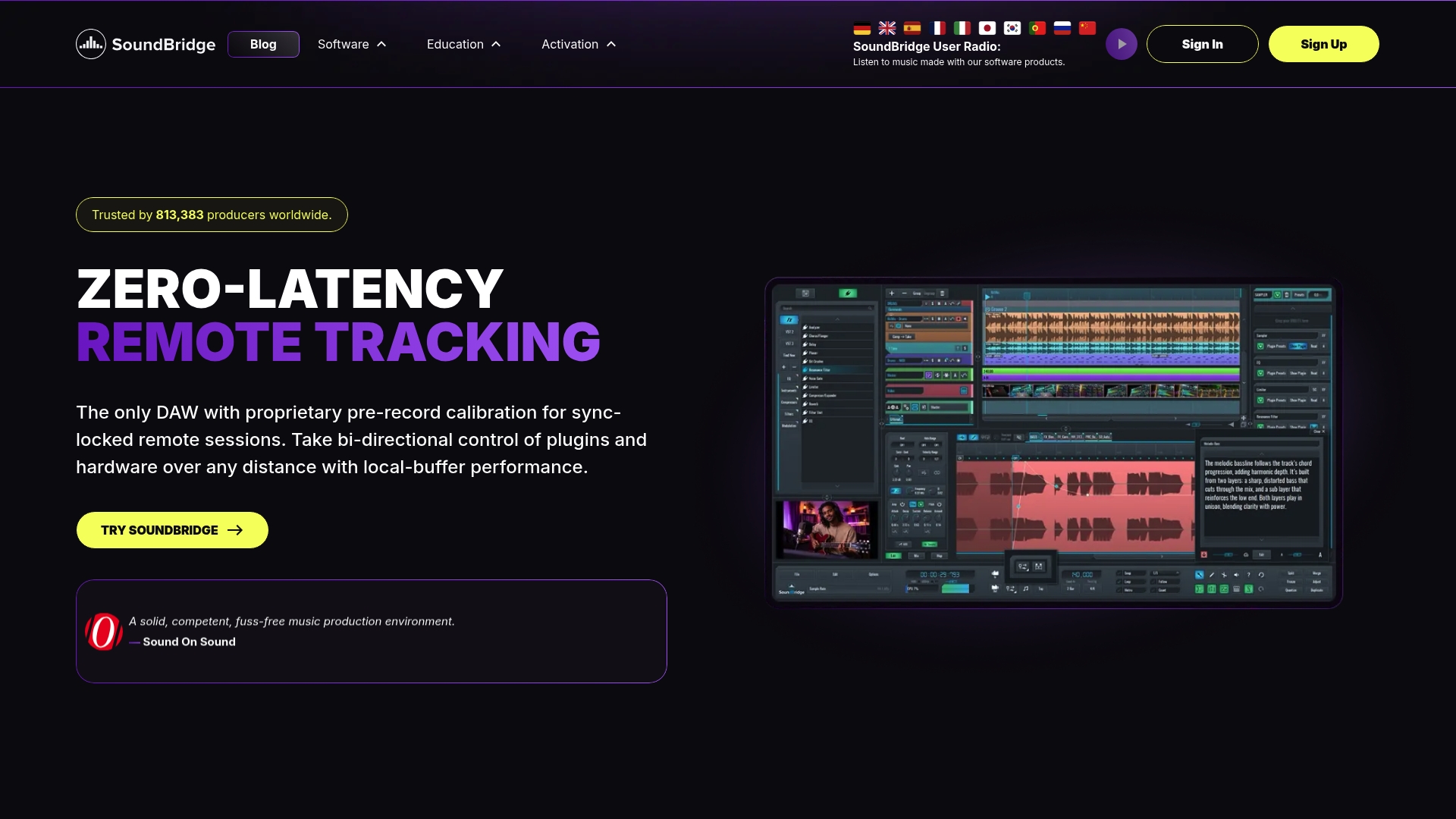
A few features worth knowing before you start your next delivery pass:
- High-fidelity processing up to 192kHz for cleaner true-peak measurement headroom before final export.
- Zero-latency remote tracking and bi-directional plugin control for real-time collaborative mix review.
- Integrated video and talkback built in, useful for scoring and post sessions where picture lock drives loudness decisions.
- Expert-led tutorials covering mastering, mixing, and automation workflows that feed directly into loudness compliance.
Start with the free version to explore the workflow, or work through the audio editing automation guide to build the repeatable QC steps this article covers directly into your own sessions.
Sources
- Recommendation ITU‑R BS.1770-5 (11/2023) Algorithms to measure audio program loudness and true-peak audio level
- A/85, Techniques for establishing and maintaining audio loudness for digital television (2026 revision)
- AESTD1008: Recommendations for Loudness of Internet Audio Streaming and On-Demand Distribution
FAQ
Is 10 LUFS too loud for a delivery?
An integrated loudness anywhere near −10 LUFS is far louder than any standard delivery target, which typically sits between −23 and −16 LUFS depending on platform. A file measuring that hot would almost certainly get rejected or automatically turned down, likely losing dynamic range in the process.
Is 100 decibels twice as loud as 90?
Perceived loudness roughly doubles for each 10 dB increase in sound pressure level, a general acoustic principle distinct from LUFS-based program loudness measurement.
What LUFS should I actually master to?
There is no single universal target, as it depends entirely on the destination: aim for the ATSC A/85 or EBU R128 family, around −23 to −24 LUFS for broadcast, or check the specific platform’s published target for streaming and podcast delivery, commonly near −16 LUFS.
What is the difference between LUFS-M and LUFS-S?
LUFS-M refers to momentary loudness, a very short measurement window used to catch loud transients while mixing, while LUFS-S refers to short-term loudness, a rolling few-second window that shows how loudness trends over a scene or phrase. Neither is the number you report on delivery; that is integrated loudness, but both help you monitor and shape a mix before final measurement.
Recommended
MASTER MUSIC PRODUCTION
Expert-led courses designed to take you from fundamentals to finished tracks.

HOUSEFrom bouncy bass and solid kicks, this course teaches you the most modern House music production techniques needed to succeed and stand out.

TRAPQuit sounding like generic Trap and produce something World with hints of the Far East. Create ethnic soundscapes to put your Trap ahead of the curve.

AMBIENTProduce relaxing, sophisticated psy-influenced ambient. Psychedelic and relaxing to listen to, create meditative soundscapes to put your listeners in Zen.