

Game Audio Remote Collaboration: The Producer's Pipeline Guide
Last Edited: Aug 5, 2026

A DAW-first pipeline built on consolidated stems, middleware as source of truth, version control for metadata, and CI/CD automation is the fastest way to ship game-ready audio from a distributed team. Start here: export every stem from bar 1 (timecode 00:00:00), attach a change log with plugin versions and tempo maps, and adopt version control for metadata before anything else. For studio-accurate remote collaboration, SoundBridge is the recommended DAW platform, offering zero-latency remote tracking, integrated talkback and video, and high-fidelity processing up to 192kHz.
TL;DR — three actions to take this week:
- Export consolidated stems starting at bar 1 with sample rate, bit depth, and channel layout locked before sharing anything.
- Attach a change log to every export documenting plugin versions, tempo map, key, and owner.
- Adopt version control for metadata (Perforce for large studios, Git plus cloud storage for smaller teams) before your first remote session.
What Hardware and Software Does Every Remote Game-Audio Contributor Need?
Your signal chain is only as strong as its weakest link, and in a remote setup that weak link is usually the interface or the monitoring environment. A high-fidelity audio interface with stable clocking, such as the Universal Audio Apollo, keeps driver latency predictable and eliminates the clock drift that corrupts remote takes. Pair it with a low-noise large-diaphragm condenser or dynamic mic, closed-back headphones for accurate monitoring, and basic room treatment or a reflection filter.
For cleanup, iZotope RX is the standard for removing room noise, clicks, and background hum from field and home-studio takes before they enter the pipeline. No amount of downstream processing fixes a noisy source.
- Audio interface: — stable clocking, low-latency ASIO/Core Audio drivers (Universal Audio Apollo is a proven choice)
Pro Tip: Run a 1kHz tone through your interface at session start and verify the sample rate matches your project spec. A mismatch here causes pitch drift that survives all the way into the engine.
DAW Session Rules and Export Protocol for Game Pipelines
Raw DAW session files should never be the canonical exchange format across a distributed team. Plugin versions, sample-rate settings, and routing differ between contributors, and a session that opens cleanly on one machine can become corrupted or silenced on another.
Export checklist (copy this into your onboarding doc):
- Consolidate all stems starting precisely at bar 1 (timecode 00:00:00), with no pre-roll.
- Lock sample rate to a standard value, typically used for game or cinematic work, and bit depth set to a high-quality standard.
- Export each stem as a discrete mono or stereo file; never print a mix bus unless the middleware event calls for it.
- Embed or sidecar the tempo map and key signature.
- Use a strict filename template:
[ProjectCode]_[StemType]_[Version]_[Owner].wav(example:ZX01_Amb_v03_JDoe.wav). - Attach a change log before uploading.
Change-log entry template:
- Owner: J. Doe
- Date/Time: 2026-03-14 / 14:32 UTC
- Stems exported: ZX01_Amb_v03, ZX01_SFX_v02
- Plugin versions: Fab-Filter Pro-Q 3 v3.22, SoundBridge reverb v2.1
- Tempo map: 120 BPM, 4/4, no changes
- Export settings: 48kHz / 24-bit / stereo interleaved
- Notes: Replaced room tone layer; check loop point at 0:32
Tools like AMAPP can automate parts of this by rendering clusters and pushing directly to Wwise, cutting the manual spreadsheet step for larger projects.
Pro Tip: Before every upload, run a quick audio-editing check to confirm silence at the head and tail of each stem—a single frame of noise at bar 1 can break loop-point alignment in middleware.
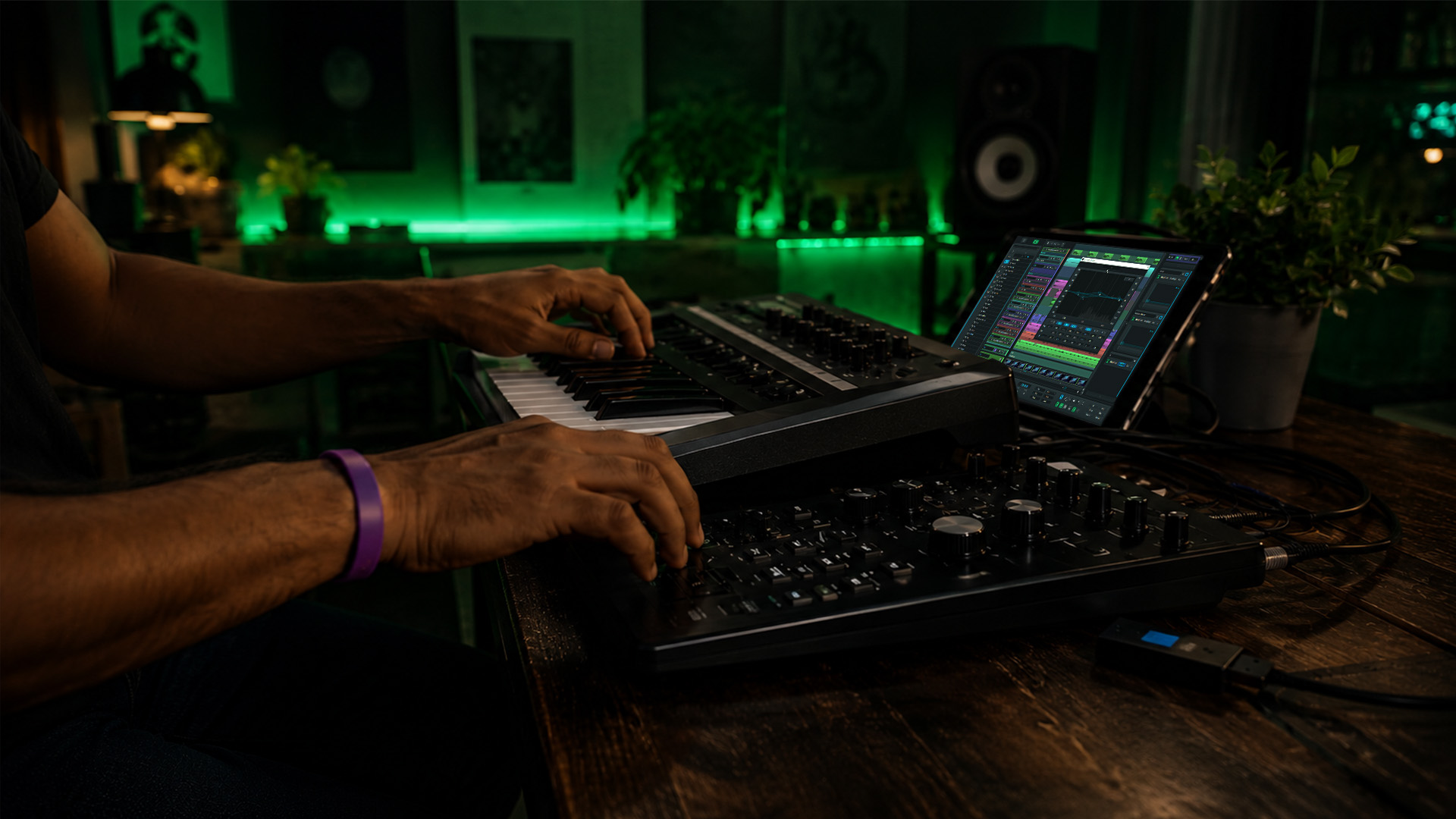
How Middleware (Wwise vs. Fmod) Shapes Your DAW-Based Remote Workflow
Middleware is where your DAW work becomes interactive audio. Design in the DAW, implement in middleware, and iterate against middleware state. That sequence keeps behavior consistent in the engine regardless of which contributor exported the stem.
Wwise vs. FMOD at a glance:
| Dimension | Wwise | FMOD |
|---|---|---|
| Best fit | AAA pipelines, deep hierarchy | Indie/mid, event-driven prototyping |
| Stem structure | Hierarchical containers, bus routing | Flat events, DAW-like timeline |
| Metadata needs | Extensive (states, switches, RTPCs) | Lighter (parameters, snapshots) |
| DAW-like feel | Lower | Higher |
| Automation tooling | SoundBanks, WAAPI | FMOD Studio API |
Mapping your DAW tracks to middleware objects:
- Label every DAW track with the middleware event name it will feed (example:
Amb_Forest_Loopmaps to Wwise containerAmb_Forest). - Export stems per event, not per instrument, so middleware objects stay atomic.
- Maintain a middleware-first change log: when you update a stem, update the middleware event version in the same commit.
- Automate path and name mapping with a script or a tool like AMAPP so the engine asset path never drifts from the DAW stem name.
Reactional Engine demonstrates what direct DAW integration looks like at its fastest: instant in-game testing and automatic format conversion for Unity and Unreal, which shortens the iteration loop from hours to minutes.
Pro Tip: Treat your middleware project file as the source of truth, not the DAW session. If a stem changes, the middleware event version increments first, then the build pulls the new asset.
How Should You Handle Version Control and Asset Management for Audio Teams?
DAW session files are poor VCS artifacts because they are binary, DAW-specific, and often enormous. What you actually need to version is the metadata: sample rate, bit depth, plugin list, tempo map, and stem offsets. Hybrid storage solves this cleanly: cloud storage for audio binaries, Perforce or a similar enterprise VCS for metadata and locking.
Metadata sidecar fields to track per stem:
- Sample rate and bit depth
- Channel layout (mono/stereo/5.1)
- Plugin chain with version numbers
- Tempo map and key signature
- Stem offset from bar 1
- Middleware event name and version
- Owner and last-modified timestamp
Conflict resolution and local caching rules:
- Use exclusive file locking (Perforce-style) for any stem that feeds a live middleware event.
- Cache the last known-good version locally so contributors can work offline without breaking the build.
- Sync before every session start, not just before upload.
- When a conflict occurs, the middleware event version is the tiebreaker: the stem that matches the current middleware state wins.
Pro Tip: Keep a “golden stems” folder in your cloud repo that holds the last build-verified version of every asset. When a build breaks, you can roll back to golden with a single copy operation.
CI/CD for Game Audio: Automating Validation, Packaging, and Deployment
Studios that scale treat CI/CD as a core audio requirement, not a dev-team luxury. Automated validation catches sample-rate mismatches, missing metadata, and broken path mappings before they reach the build engineer.
A practical CI pipeline for audio assets:
- Lint/validate: check sample rate, bit depth, filename schema, and sidecar completeness on every pushed stem.
- Convert: transcode to engine-ready formats (OGG, ADPCM, or platform-specific codec) via a packaging script.
- Package: copy converted assets into the engine’s expected folder structure, keyed to middleware event names.
- Smoke test: trigger a headless test build and run a basic audio-presence check (asset loads, no silent events).
- Notify: post pass/fail status to the team’s Slack or Discord channel with a link to the build log.
Jenkins, GitHub Actions, and TeamCity all support calling audio packaging scripts as pipeline steps. The key is that the script, not a human, handles the path mapping.
Automated validation and packaging eliminate the “last-mile” manual steps that delay audio integration in remote builds. When every push triggers a validation run, the feedback loop shrinks from a day to under an hour.
Pro Tip: Start with just the lint step. A single script that checks sample rate and filename schema on every commit catches 80% of integration failures before they reach the build.
Real-Time Remote Tracking: What Studio-Accurate Sync Actually Requires
Studio-accurate sync means sample-accurate alignment between the performer’s signal and the session timeline, with no perceptible latency on the monitor mix. Achieving it remotely requires a DAW with zero-latency monitoring, bidirectional plugin control, and integrated talkback and video so the session engineer and performer share the same reference.
- Sample-accurate sync: the DAW must lock performer and session clocks to the same timecode reference.
- Bidirectional plugin control: the engineer adjusts the performer’s monitor mix and effects from the session side without interrupting the take.
- Integrated talkback/video: eliminates the need for a separate video call, which introduces its own latency and sync drift.
- Local record backup: always record locally on the performer’s machine as a safety net; transfer the file after the session.
- Latency compensation: set buffer size to the lowest stable value the performer’s machine supports, then apply DAW-side latency compensation for any inserted plugins.
SoundBridge’s virtual collaboration features cover all of these: zero-latency remote tracking, integrated talkback and video, and bidirectional plugin control, so you run the entire tracking session from one interface.
Pro Tip: Ask the performer to record a short clap or click at the top of every take. If timecode drifts, you can manually re-align to that transient in post.
Practical Implementation Checklist and a Copyable Change-Log Template
Setup phase:
- Agree on sample rate, bit depth, and filename schema before any work begins.
- Set up cloud storage for audio binaries and VCS for metadata.
- Configure SoundBridge (or your chosen DAW) for remote tracking with talkback enabled.
- Create a “golden stems” folder and a shared change-log document.
Daily workflow:
- Sync VCS before opening any session.
- Export stems from bar 1 with the locked spec; never export from a different start point.
- Update the change log immediately after export, before uploading.
- Lock the stem in VCS before editing; unlock after upload.
Integration phase:
- Map DAW stems to middleware events using the agreed naming schema.
- Run the CI lint step on every push.
- Verify the smoke-test build passes before marking a stem as “ready for build.”
- Archive the change log entry alongside the stem version in cloud storage.
For a more in-depth checklist of remote collaboration best practices, SoundBridge’s resource library covers the full setup sequence.
Pro Tip: Pin the change-log template in your team’s communication channel so contributors fill it out before they upload, not after.
Estimated Timelines and Typical Costs for a Remote Game-Audio Pipeline
| Team size | Setup timeline | Key milestones |
|---|---|---|
| Indie (1–3 people) | 1–2 weeks | Naming schema, cloud storage, basic change log |
| Mid-size (4+ people) | 3–5 weeks | VCS rollout, CI lint step, middleware mapping |
| AAA (large studio) | several weeks | Full CI/CD, Perforce, automated packaging, smoke tests |
Typical cost ranges (USD):
- Audio interface — (Universal Audio Apollo Twin): $500–$900
Most budgets concentrate on hardware and VCS hosting in the first month, then shift to CI tooling and middleware licensing as the team scales.
Common Pitfalls in Remote Game Audio Collaboration and Quick Fixes
Top issues and how to unblock them fast:
- Sample-rate mismatch: check the interface driver and DAW project settings against the export spec; re-export from the correct rate before re-uploading.
- Plugin incompatibility: document plugin versions in the change log; if a collaborator lacks a plugin, bounce that track to audio before sharing.
- Timecode drift: verify the performer’s interface clock source; use the clap/click alignment method described in the tracking section.
- Inconsistent naming: standardize naming before work begins, and run the CI lint step to catch violations automatically.
- Missing metadata sidecar: make sidecar creation part of the export script, not a manual step.
- Cloud/VCS sync errors: always sync before opening a session; if a conflict occurs, defer to the middleware event version as the tiebreaker.
When escalating to a build or release engineer, include: the stem filename and version, the change-log entry, the CI lint output, and the middleware event name. That package cuts triage time significantly.
Pro Tip: Keep a “known issues” log in your shared change-log document. A one-line note about a recurring sample-rate mismatch saves the next contributor an hour of debugging.
What Does the Recommended Production Stack Look Like?
- Asset automation: — AMAPP for DAW-to-Wwise rendering
SoundBridge fits this stack because it covers the remote-tracking and monitoring layer without requiring a separate video conferencing tool, and its 192kHz support means you never downsample for cinematic deliverables. Run a short pilot: pick one feature’s worth of stems, run the full pipeline from SoundBridge export through middleware to a test build, and measure how many integration errors the CI step catches on the first pass.
Pro Tip: AI-assisted code generation tools can help audio designers write Blueprint or C++ wiring for engine integration without spending hours on deep software development, keeping ownership of the pipeline on the audio side.
Key Takeaways
A DAW-first pipeline with standardized stems, middleware as the source of truth, VCS for metadata, and CI/CD automation is the most reliable way to scale remote collaboration for game audio across distributed teams.
| Point | Details |
|---|---|
| Export from bar 1 | Consolidated stems starting at timecode 00:00:00 prevent loop-point and sync errors in middleware. |
| Middleware is source of truth. | Design in the DAW, implement in Wwise or FMOD, and iterate against middleware state for consistent engine behavior. |
| Version control metadata, not sessions | Track sample rate, plugin versions, and tempo maps in a sidecar; use Perforce or Git plus cloud for binaries. |
| Automate validation first | A CI lint step that checks sample rate and filename schema catches most integration failures before they reach the build. |
| SoundBridge for remote tracking | SoundBridge’s zero-latency tracking, integrated talkback/video, and 192kHz support cover the full remote session layer on a single platform. |
The Part of Remote Game Audio Most Teams Get Wrong
Most distributed audio teams spend their first month debating middleware and their last month firefighting build errors that a naming convention would have prevented. The pipeline decisions that actually determine whether a remote team ships on time are the boring ones: filename schemas, sidecar fields, and the single CI lint step that runs on every push.
Conventional wisdom says, “Get the right tools first.” The reality is that tools without process produce faster chaos. A composer working in SoundBridge with a Universal Audio Apollo and iZotope RX, exporting stems with a consistent schema and a filled-out change log, will outship a team with a more expensive stack and no agreed naming standard every single time.
The other underestimated trade-off is speed versus version safety. When a deadline hits, the temptation is to skip the VCS lock and push directly. That shortcut costs you the ability to roll back when the build breaks at 11 PM. The compromise that works: keep a “golden stems” folder that only updates after a passing smoke-test build. You move fast on the working branch and always have a safe fallback. That one habit has saved more remote audio pipelines than any tool upgrade ever has.
SoundBridge Makes This Pipeline Real for Remote Game-Audio Teams
Zero-latency remote tracking, integrated talkback and video, and 192kHz processing in a single DAW platform: that is the concrete advantage SoundBridge gives you over patching together a DAW, a video call, and a separate monitoring chain.
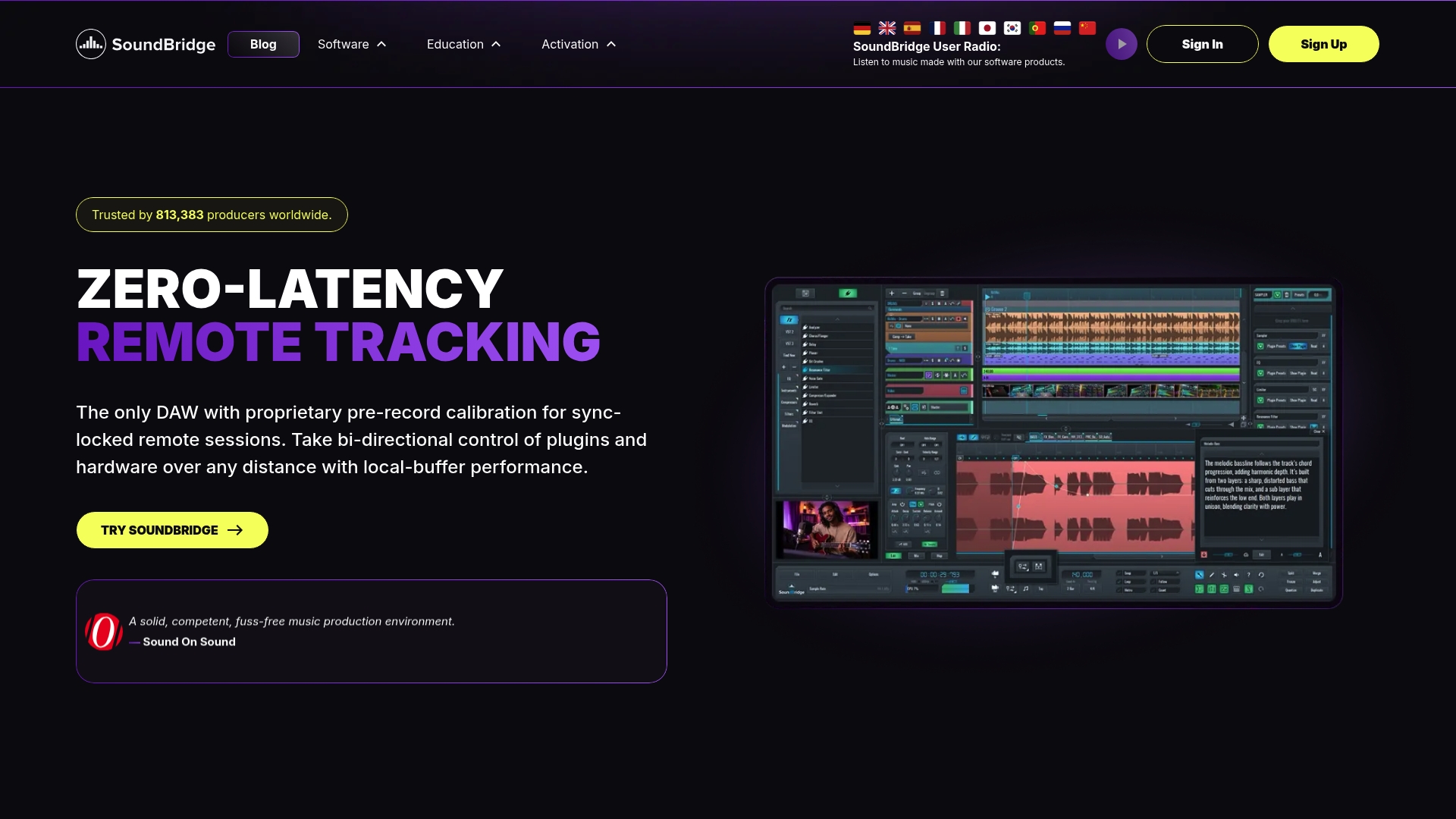
For composers and sound designers building a distributed game-audio workflow, SoundBridge removes the most friction-heavy layer: the remote session itself. You get studio-accurate sync without a separate sync tool, bidirectional plugin control so the session engineer manages the performer’s monitor mix in real time, and native video support for film scoring and cinematic sound design.
- Zero-latency remote tracking — with sample-accurate sync, no third-party conferencing required
Start your pilot session today at SoundBridge.io or go straight to the virtual collaboration feature page to see the remote-tracking setup in detail.
Useful Sources and Further Reading
- Top Tools for Game Audio: Build a Pro Studio Stack That Ships (Pro Sound Effects) — Covers middleware selection (Wwise vs. FMOD) and stack-building advice. Supports the middleware integration section.
- How Remote Game Development Actually Works at Scale (ejaw) — CI/CD practices for distributed game teams. Primary source for the audio CI/CD section.
- Remote work in game audio (Audio Game Jam) — Naming conventions and folder-structure pitfalls. Supports the pitfalls and implementation checklist sections.
- AMAPP: From DAW to Game — DAW-to-Wwise automation tool. Cited in session rules and middleware integration sections.
- Reactional Engine (Interactive Music Framework) — Direct DAW integration and in-game testing for interactive music. Cited in middleware integration and real-time tracking sections.
- SoundBridge Virtual Collaboration — Feature page for SoundBridge’s remote-tracking, talkback, and sync capabilities. Used in real-time tracking and promo sections.
- Expert tips to maximize your remote music collaboration (SoundBridge) — Checklist-style guidance for remote workflows. Supports the implementation checklist section.
Recommended
MASTER MUSIC PRODUCTION
Expert-led courses designed to take you from fundamentals to finished tracks.

HOUSEFrom bouncy bass and solid kicks, this course teaches you the most modern House music production techniques needed to succeed and stand out.
TRAPQuit sounding like generic Trap and produce something World with hints of the Far East. Create ethnic soundscapes to put your Trap ahead of the curve.

AMBIENTProduce relaxing, sophisticated psy-influenced ambient. Psychedelic and relaxing to listen to, create meditative soundscapes to put your listeners in Zen.