

Music Production Mistakes Every Producer Must Avoid
Last Edited: Jun 23, 2026

Music production mistakes are defined as technical and creative errors that degrade the clarity, energy, and professionalism of your tracks before they ever reach a listener. Every producer, from bedroom beatmakers to seasoned engineers, runs into the same core pitfalls: poor gain staging, plugin overload, untreated rooms, and skipping arrangement work. Recognizing these errors early is what separates producers who grow fast from those who spin their wheels for years. This guide breaks down the most damaging production mistakes to avoid, with practical fixes you can apply in your next session.
1. What Are the Most Critical Music Production Mistakes?
The most damaging production errors share one trait: they compound. A bad gain structure feeds into a muddy mix, which leads to over-compression, which kills your track’s punch. Understanding the chain of cause and effect is the first step toward cleaner, more professional results.
The mistakes covered here span the full production workflow, from signal setup and plugin use to room acoustics and finishing habits. Each one has a clear fix. Work through them systematically, and your mixes will improve faster than any new plugin purchase could achieve.

2. Gain Staging: The Foundation You Cannot Skip
Gain staging is the practice of setting consistent signal levels throughout your signal chain to prevent distortion and preserve headroom. Producers should maintain levels between -18dB and -12dB per channel to avoid digital clipping. That range gives your mix bus room to breathe when all tracks sum together.
Poor gain staging creates problems that no plugin can fix later. Clipping at the source permanently locks distortion into your audio. Noise floors rise when you record too quietly and then boost in the mix.
- Keep your loudest individual channels peaking around -10dB on the channel fader.
- Check input gain before recording, not after
- Use a gain plugin at the top of every channel strip to set a consistent trim level.
- Watch your master bus meter: if it clips before you touch the limiter, your gains are too hot.
Keeping channels around -10dB provides optimal headroom for the master bus sum. That headroom is what gives your mastering engineer, or your own mastering chain, space to work without squashing dynamics.
Pro Tip: Set your gain structure before you place a single EQ or compressor. Gain staging is a habit, not a fix. Clipping that happens at the input stage cannot be mixed out later.
3. Why Overprocessing With Plugins Kills Your Mix
Plugin overload is one of the most common pitfalls in music mixing, and it stems from a simple misconception: more processing equals better sound. Effective plugin use targets specific problems, not general improvement. Stacking five EQs and three compressors on a snare does not make it sound better. It makes it sound processed.
Over-boosting EQ frequencies creates frequency masking, where boosted elements from one track clash with another. Over-compression flattens dynamics and kills the punch and liveliness that make a track feel alive. Experienced producers use compression sparingly and only to solve a specific dynamic problem, not as a default effect on every channel.
- Limit yourself to one EQ and one compressor per channel as a starting rule
- Ask what problem you are solving before inserting any plugin
- Use the bypass button constantly to check whether the plugin is actually helping
- Avoid stacking multiple reverbs or delays without a clear intent
The most overlooked trap in this category is mixing what you see instead of what you hear. Producers stare at plugin GUIs and adjust knobs visually rather than listening critically. Close your eyes, bypass the plugin, and ask whether the difference is real or imagined.
Pro Tip: Try a “zero-boost” approach in EQ. Apply narrow cuts to remove problem frequencies rather than sweeping heavy boosts. This keeps the true character of your sound intact within the full arrangement.
4. Mixing in Solo: A Habit That Ruins Context
Mixing in solo too often leads to decisions that sound great in isolation but clash badly in the full mix. This is one of the most persistent blunders in beginner music production because it feels logical. You want to hear the details of each element. But your listeners never hear tracks in solo.
Every EQ cut and boost you make in solo will behave differently when all tracks play together. Phase relationships between instruments only reveal themselves in context. Frequency masking between a kick and a bass, for example, is invisible when you solo either track alone.
The fix is straightforward: make all creative mixing decisions with every track playing. Use solo mode only to identify a specific technical problem, such as a click or a noise artifact. Then return to the full mix immediately.
A/B testing against reference tracks every 15–20 minutes helps you avoid drift and maintain perspective. Your ears adjust to whatever they hear repeatedly, so regular comparison keeps your decisions grounded.
5. How Untreated Room Acoustics Wreck Your Mix Decisions
Untreated rooms are the silent killer of home studio mixes. Recording in untreated rooms locks in unnatural reflections that color every decision you make. You add bass because the room is absorbing the low end. You cut highs because flutter echo makes them harsh. Your mix sounds great in the room and terrible everywhere else.
Common untreated room problems include:
- Standing waves that create bass buildup at specific frequencies
- Early reflections from parallel walls that smear stereo imaging
- Flutter echo between hard surfaces that adds artificial brightness
- Bass trapping issues in corners that make the low end feel inconsistent
Affordable treatment starts with bass traps in corners and broadband absorbers on the first reflection points. You do not need a professionally built room. You need enough treatment to make your monitoring decisions reliable.
Monitor placement matters as much as treatment. Place your studio monitors at ear height, forming an equilateral triangle with your listening position. Keep them away from walls to reduce bass buildup at the low end.
Pro Tip: Always check your mix on at least three playback systems: studio monitors, headphones, and a consumer speaker, such as a Bluetooth speaker or a laptop. If it translates across all three, it will translate everywhere.
6. Monitoring at the Wrong Volume
Mixing at high volumes causes ear fatigue and frequency masking, making mixes sound balanced when they are not. This is a common production mistake to avoid that costs producers nothing to fix. Turn it down.
Mixing at conversational volume levels ensures better balance translation across different playback systems. At lower volumes, your ears hear the midrange most accurately. High-volume mixing exaggerates bass and treble, leading you to cut those frequencies and create a thin, hollow mix on smaller speakers.
A practical rule: if you can comfortably hold a conversation at your monitoring volume, you are in the right range. Save the loud playback for quick energy checks, not detailed mixing decisions. Your ears will last longer, and your mixes will translate better.
7. Why Skipping Arrangement Completion Stalls Your Progress
Polishing individual elements before finishing the arrangement is one of the most creativity-killing habits in music production. You spend three hours perfecting a synth sound in bar two, then lose momentum before the track has a structure. The result is a folder full of unfinished projects and no completed tracks to show for your time.
The arrangement is the skeleton of your track. Without it, detailed mixing work is wasted effort. A perfectly EQ’d kick drum in a loop that never becomes a song is not progress.
- Build a rough arrangement first, even if it uses placeholder sounds
- Get the song structure from intro to outro before touching detailed processing
- Use a rough mix, not a polished one, to guide arrangement decisions
- Set a rule: no detailed mixing until the arrangement is complete
Finishing tracks requires balancing creative impulses with technical work to maintain project momentum. The producers who grow fastest are the ones who complete tracks regularly, not the ones who perfect loops endlessly. Completing a track, even an imperfect one, teaches you more than polishing a section for weeks.
8. Neglecting Reference Tracks During Mixing
Reference tracks are professionally mixed and mastered songs in your genre that you compare your mix against during production. Ignoring reference tracks causes producers to lose perspective on balance, loudness, and tonal quality compared to industry standards. Your mix sounds great until you play a commercial track and realize your low end is missing entirely.
- Choose two or three reference tracks that match your genre and target energy.
- Import them directly into your DAW session at a matched loudness level
- Compare every 15–20 minutes, not just at the end of a session
- Use references to identify weaknesses, not to copy settings
Reference tracks reveal problems your ears have stopped hearing. If your mix sounds dull next to a reference, your high end needs attention. If it sounds thin, your low-mid range is missing weight. References give you an objective anchor when your ears have adapted to your own mix.
The goal is not to clone the reference. The goal is to use it as a calibration tool. Your track should have its own identity. The reference keeps your technical decisions honest.
9. Skipping Audio Editing Before Mixing
Clean audio editing before mixing is a production step that most beginners skip entirely. Unedited tracks carry background noise, timing inconsistencies, and unwanted artifacts that no amount of mixing can fully hide. Editing is not glamorous, but it is the difference between a mix that fights you and one that flows.
Essential audio editing techniques include noise gating, clip gain automation, timing correction, and removing breaths or room noise between phrases. Each of these steps reduces the workload on your mix bus and gives your plugins cleaner material to work with. A compressor on a well-edited vocal track sounds musical. The same compressor on an unedited track pumps and breathes in all the wrong places.
Build editing into your workflow as a dedicated phase before you open a single EQ. Treat it as part of the production process, not an afterthought.
10. Ignoring DAW Fundamentals and Workflow Efficiency
Poor DAW habits compound every other mistake on this list. Disorganized sessions, unlabeled tracks, and inconsistent routing create confusion that leads to errors. When you cannot quickly find a track, you lose creative momentum. When your routing is unclear, gain staging becomes guesswork.
Learning the core DAW features that support a clean workflow, such as track templates, color coding, and session organization, removes friction from every session. A well-organized session lets you focus on sound, not navigation. Color-code your tracks by instrument family. Use templates that pre-load your gain structure and monitoring chain. Name every track before you record a single note.
These habits feel slow at first. They save hours across a full project and eliminate the category of mistakes that come from pure disorganization.
Key Takeaways
Avoiding music production mistakes requires disciplined habits across gain staging, plugin use, room monitoring, and workflow, because each error compounds the next and degrades your final mix.
| Point | Details |
|---|---|
| Gain stage first | Keep channel peaks between -18dB and -12dB before placing any EQ or compression. |
| Limit plugin use | Insert only what solves a specific problem; bypass constantly to confirm the plugin is helping. |
| Mix in context | Make all creative decisions with every track playing, not in solo mode. |
| Monitor at low volume. | Mix at conversational levels to avoid ear fatigue and ensure translation across playback systems. |
| Finish arrangements first | Complete song structure before detailed mixing to maintain momentum and actually finish tracks. |
What I’ve Learned Watching Producers Repeat the Same Errors
The mistake I see most often is not technical. It is the belief that the next plugin purchase will fix a fundamentally flawed workflow. Producers spend hundreds of dollars on new compressors and EQs while their gain structure is clipping, their room is untreated, and their sessions are a mess of unlabeled tracks. The tools are not the problem.
The second pattern I notice is the perfectionism trap. Producers polish a single eight-bar loop for weeks and never finish a track. Finishing is a skill. It requires you to make decisions, commit to them, and move forward even when something is not perfect. The producers I have seen grow the fastest are the ones who complete three imperfect tracks a month, not the ones who spend six months on one loop.
The technical fixes in this article are real, and they work. But the mindset shift matters more. Treat every session as a learning opportunity, not a performance. Accept that your first hundred tracks will have flaws. The goal is to make each one better than the last, not to make any single one perfect. Patience and repetition build the ear and the instincts that no tutorial can shortcut.
— Wake
SoundBridge: Build Better Production Habits With the Right Tools
Avoiding production errors gets easier when your DAW supports a clean workflow from the start. SoundBridge is built for producers at every level, with an interface that keeps your session organized, your gain chain visible, and your monitoring reliable.
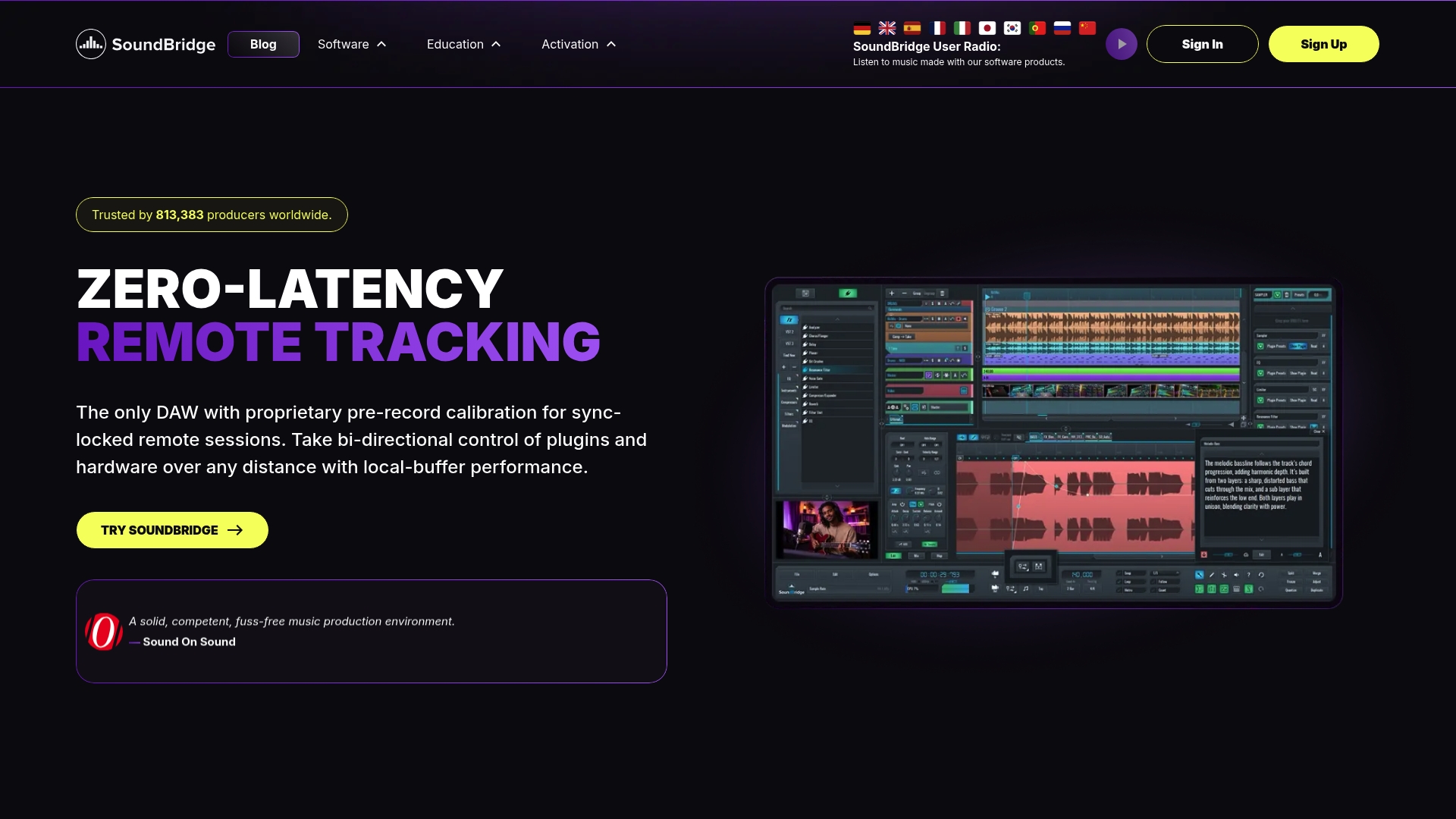
The Aspiring Producer’s Mixing Guide from SoundBridge walks you through the full mixing process step by step, from gain staging to final bus processing. Whether you are setting up your first home studio or refining an intermediate workflow, SoundBridge gives you the tools and the knowledge to produce with confidence. Visit soundbridge.io to explore the platform and start building the habits that lead to professional results.
FAQ
What is gain staging in music production?
Gain staging is the process of setting consistent signal levels throughout your recording and mixing chain to prevent distortion and preserve headroom. Producers should keep individual channel peaks between -18dB and -12dB to avoid clipping that cannot be fixed in the mix.
How do reference tracks improve your mix?
Reference tracks give you an objective point of comparison for balance, loudness, and tone against professionally produced songs in your genre. Comparing your mix every 15–20 minutes against a reference prevents your ears from adapting and losing perspective.
Why does mixing in solo cause problems?
Mixing in solo hides phase relationships and frequency masking that only appear when all tracks play together. Creative EQ and compression decisions made in solo often clash badly in the full mix context.
How does monitoring volume affect mix quality?
Mixing at high volumes causes ear fatigue and frequency masking, which makes an unbalanced mix sound acceptable. Mixing at conversational volume levels produces more accurate balance decisions that translate better across different playback systems.
What is the biggest mistake beginner producers make?
Polishing individual elements before completing the arrangement is the most common beginner mistake in music production. It kills creative momentum, leads to unfinished projects, and wastes detailed mixing work on tracks that never reach a final structure.
Recommended
MASTER MUSIC PRODUCTION
Expert-led courses designed to take you from fundamentals to finished tracks.

HOUSEFrom bouncy bass and solid kicks, this course teaches you the most modern House music production techniques needed to succeed and stand out.

TRAPQuit sounding like generic Trap and produce something World with hints of the Far East. Create ethnic soundscapes to put your Trap ahead of the curve.

AMBIENTProduce relaxing, sophisticated psy-influenced ambient. Psychedelic and relaxing to listen to, create meditative soundscapes to put your listeners in Zen.