

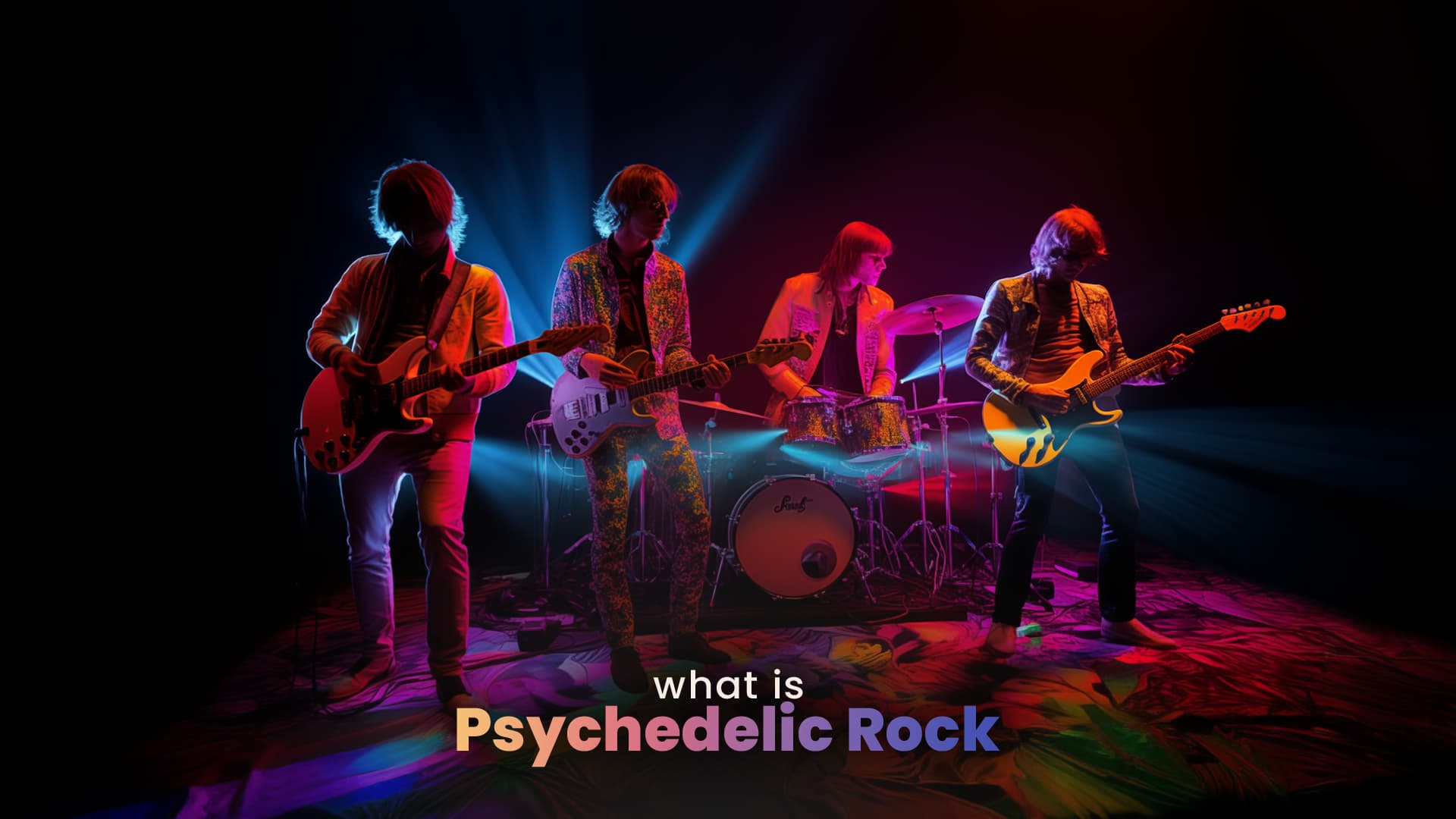
Psychedelic Rock
Last Edited: Jan 18, 2024
The late 1960s saw the emergence of psychedelic rock, also referred to as psychedelia. The experience of using hallucinogenic substances like LSD inspired this kind of music. Blues and folk rock components were later merged into psychedelic rock, which helped hard rock and progressive rock develop.
The peak of psychedelic rock (1965 to 1971) was a very brief period in the history of rock music. The hippie uprising of the mid-to-late 1960s gave rise to psychedelic rock on the American West Coast. The popularity of psychedelic rock initially gained traction in the San Francisco Bay region. It then swiftly extended across the United States and Europe. The 13th Floor Elevators (a rock group in Austin, Texas) is the first to classify their music as psychedelic rock. The group even called its first album Psychedelic Sounds of the 13th Floor Elevators, headed by guitarist and vocalist Roky Erickson. The Doors, The Grateful Dead, Big Brother and the Holding Company, the Quicksilver Messenger Service, Moby Grape, Iron Butterfly, and Jefferson Airplane were among the well-known early West Coast psychedelic acts.
Notable Releases
Inspired by the surreal vision seen in Lewis Carroll's Alice's Adventures in Wonderland, Jefferson Airplane's 1967 hit song "White Rabbit" peaked at number eight on the Billboard Hot 100 list. During this period, prominent rock bands started integrating psychedelia into their music, evident on albums such as the Byrds' Fifth Dimension (1966), the Beach Boys' Pet Sounds (1966), the Yardbirds' Shape of Things (1971), and the Rolling Stones' Their Satanic Majesties Request (1967). The Beatles also created a few albums that explore LSD. These albums include Revolver (1966), Magical Mystery Tour (1967), and Sgt. Pepper's Lonely Hearts Club Band (1967) showcased a distinct psychedelic sound. A new wave of psychedelic rock pioneers emerged in England. Typically, British psychedelic rock had less aggression and a greater emphasis on surrealism than the more intense American version.
Donovan's 1966 album "Sunshine Superman" was an early and prominent example of psychedelic pop music. Cream's "Disraeli Gears" (1967) and the Who's "Tommy" (1969) solidified the groups' presence in the psychedelic music scene. Although the Beatles' popularity remained constant, Pink Floyd became the new leading figure in the British psychedelic music scene. Songwriter Syd Barrett created several innovative and mesmerizing acid-rock songs on Pink Floyd's first album. This album, "The Piper at the Gates of Dawn" (1967), quickly established the record as a timeless masterpiece. LSD, the genre's primary influencing substance, was prohibited in both the USA and the United Kingdom in the late 1960s.
The 1969 Woodstock music event included performances by Jimi Hendrix, the Grateful Dead, and Jefferson Airplane and was one of the final noteworthy performances of the psychedelic era. The following year, Charles Manson and his followers claimed that the Beatles' song "Helter Skelter" inspired them to kill, adding to the rising anti-hippie attitude.
Characteristics of Psychedelic Rock
Psychedelic rock frequently incorporates hypnotic studio effects such as reverb, phasing, distortion, and reversed sound. The sound of an electric guitar with feedback and a wah-wah pedal symbolizes the genre. Psychedelic rock performers used Indian instruments such as the sitar and tambura in their music. They also used keyboard instruments like the Mellotron (an analog sampler), harpsichord, and electronic organ. Extended improvised guitar solos are central in several psychedelic rock compositions. Psychedelic rock songs frequently have peculiar and complex lyrics that may hint at the consumption of hallucinogenic substances.
If you enjoyed this article, please check out the following:
MASTER MUSIC PRODUCTION
Expert-led courses designed to take you from fundamentals to finished tracks.
HOUSEFrom bouncy bass and solid kicks, this course teaches you the most modern House music production techniques needed to succeed and stand out.

TRAPQuit sounding like generic Trap and produce something World with hints of the Far East. Create ethnic soundscapes to put your Trap ahead of the curve.

AMBIENTProduce relaxing, sophisticated psy-influenced ambient. Psychedelic and relaxing to listen to, create meditative soundscapes to put your listeners in Zen.