

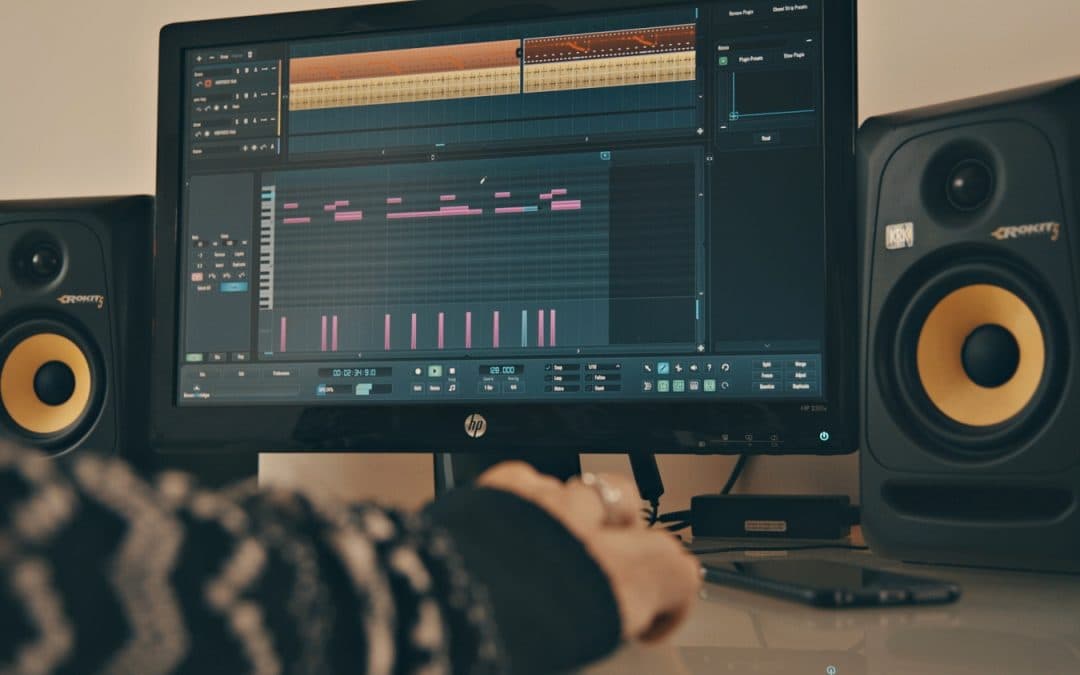
Studio Monitors - 5 Essential Tips For Choosing The Right One
Last Edited: Oct 28, 2023
Studio monitors are a must-have piece of equipment. This is true whether you're recording, mixing a large project, or producing your demos. Compared to systems like home stereo or laptop speakers, studio monitors will allow you to hear your recordings with accurate detail. However, when you purchase a pair of studio monitors, many questions might arise. What makes a good studio monitor? How do they differ from standard sound systems? How is a good and accurate studio monitor supposed to sound? In the following article, we will provide important information regarding this subject.
Basic Understanding
One of the most critical aspects differentiating studio monitors from other systems is accuracy. When you record an instrument or work on mixing, you want to have as little sound coloration as possible; unlike home stereo speakers, which may have a hyped bass or treble response, quality studio monitors don't, or shouldn't favor, any frequencies over others. No matter what the volume level is, a good monitor will ideally offer you an accurate and constant response. This lets you objectively listen to how different elements of the mix sound at various volume levels. They also reproduce better musical transients, which gives the sound they recreate more complexity and depth.
Choosing the Right Size of Studio Monitors
Studio monitors are available in a range of sizes. In most cases, a pair of so-called "near-fields" would probably be enough for your home studio. This means that the studio monitors should sit close to your listening position. The most prominent speaker's cone size (driver) defines the studio monitor's size. This is expressed in inches.
In most cases, depending on the size of your room, you should consider getting a 5- or 6-inch studio monitor. These will be enough to convert one of your house's bedrooms into a studio. If you have more space, you might consider getting 8-inch ones. Finally, if you plan to treat your studio acoustically, an extra sub-bass speaker might not be a bad idea.
The Bass Response
We all like an excellent, robust, low-end response, but if it's too much or too little, it will result in EQ decisions that don't translate well to other sound systems. This means you may hear precisely the amount of bass you want in your studio, but in others, you will listen to either too much or too little.
It's worth noting that if you're making any other music genre than techno future bass or similar electronic music genres, you might not need the most profound bass response. Near-field monitors with 5" or 6" drivers can suffice despite the absence of the lowest octave of bass. After some time adapting, you should know what well-produced commercial music sounds like on them and strive for that balance.
However, if you work in a genre where the music often plays on systems with intense bass, you must know what's happening there. In this case, you might consider getting a larger woofer/cabinet (8" -10" +) or coupling a smaller pair of monitors with your sub-bass speaker. Be careful to balance right the latter with the small monitors!
Get To Know Your Studio Monitors
The truth is that you will need some time to adapt and become acquainted with your studio monitors. Pay close attention not only while you're recording but also while listening to various of your favorite songs. In time, you will discover how your monitors react to different musical materials. This will help you learn not just what they're promising but also what they're not—and how to compensate for that so your mixes sound better.
Don't Look Back After Choosing Your Pair
Once you've established your size budget and done some research, make your purchase and move on. When it comes to different pairs of monitors, people have different experiences. This is primarily a question of personal choice, as well as many other criteria that influence the listening experience.
For instance, the sound coming from your speakers will be colored and changed in your room. The sound coming from your DAW and into your speakers will be colored and shaped by your D/A converters. The way you hear what comes out of your speakers is colored and shaped by your listening location in the room, and so on.
In a few words, please stick to your informed choice of monitors, get used to your new system, and then focus on getting the most out of it.
MASTER MUSIC PRODUCTION
Expert-led courses designed to take you from fundamentals to finished tracks.

HOUSEFrom bouncy bass and solid kicks, this course teaches you the most modern House music production techniques needed to succeed and stand out.

TRAPQuit sounding like generic Trap and produce something World with hints of the Far East. Create ethnic soundscapes to put your Trap ahead of the curve.

AMBIENTProduce relaxing, sophisticated psy-influenced ambient. Psychedelic and relaxing to listen to, create meditative soundscapes to put your listeners in Zen.